


Building Affordable Housing in Ghana: How Public-Private Partnerships Are Making It Possible
Safe and affordable housing is one of the most pressing issues in the economies of developing countries nowadays. The high population increase, increased migration into cities, and the high construction prices have resulted in inadequate housing in most regions of the globe.
 In Ghana, especially in West Africa, housing affordability has been a key policy agenda in growing cities whose populations have increased beyond the supply of houses.
Ghanaian families are faced with the challenge of locating safe and affordable
homes, particularly in the fast-expanding cities.
Governments have tried to resolve housing shortages over decades through state-funded construction programs. Although these efforts had some fruit, they faced several challenges, including a lack of funds, bureaucratic inefficiency, and delays in providing housing units.
Meanwhile, the problem of affordable housing remained unaddressed as the
emphasis of the activity of the private real estate developers was on
high-income housing development projects. This encouraged low- and middle-income
households to be often locked out of the available public and private housing
opportunities.
To address these issues, policy-makers and business executives started experimenting with alternative forms of housing development. Public-Private Partnerships (PPP) has been considered one of the most promising strategies.
These are arrangements where the government agencies partner with
the individual companies to fund, develop, and maintain housing projects.
Collaborating on the merits of both industries, PPPs will ensure their
provision of housing more effectively, minimize financial risks, and increase
access to affordable housing.
The PPPs have been accepted as one of the effective
instruments of infrastructure and housing development across the globe. The
view that PPP models have the capacity to mobilize private capital and at the
same time safeguard the social goals and objectives without government
interference has been advanced by international organizations like the World
Bank and UN-Habitat in most developing nations.
In Ghana, the concept of public-private partnerships is
becoming a viable measure towards addressing the housing shortage in the
country. Government services offer land, policy encouragement, and regulatory
framework, whereas the private developers offer investment capital,
construction expertise and project management capabilities. This partnership
enables the housing projects to proceed at a faster rate and on a larger
scale compared to the rate of government financial support.
In this blog, the author will discuss the evolution of public-private partnerships in Ghana housing industry. It looks at issues which caused the necessity of PPPs, the form of these partnerships, their economic and social effects and the opportunities and challenges that awaits them in the future.
We are in a good position to appreciate the use of PPPs in ensuring
that thousands of Ghanaian families live to realize the dream of owning homes
at affordable prices.
Ghana’s Housing Crisis and the Need for Innovative Solutions
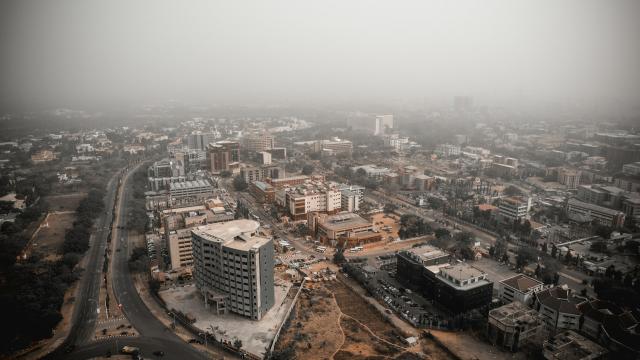
These problems have been decades old and the housing shortage in Ghana is still there. The growth in population development and urbanization has resulted in increasing demand of housing which the construction industry in the country has found difficult to cope with.
Ghana,
as per the estimates that are widely quoted has a two million plus housing
deficit that is ever-swelling every year as cities grow and the populations
dwelling in them rise.
The pressure on housing in urban centers like Accra, Kumasi
and Takoradi has been particularly exerted. Migration in rural areas has been
increased with individuals transferring to urban areas in search of job
opportunities, education, and better livelihoods. Although urban development
has led to the growth of the economy, it has brought massive burdens on housing
structures and systems of city planning.
The high-cost construction is one of the primary causes of
the housing shortage. Materials used in building like cement, steel, roofing
materials have been getting costly, owing to inflation and importation of
goods. Such increasing costs pose a challenge to developers to construct
affordable homes as they continue to make profits.
Another significant impediment is access to housing finance.
Most conventional mortgage programs may demand consistent employment, large
down payments and credit histories. Nonetheless, much of Ghanaian labor force
works on the informal sector where there is low income record keeping. This
makes it impossible to have a large number of families to be able to qualify to
get conventional mortgage loans.
The housing crisis is also caused by land acquisition and
ownership. The land tenure system of Ghana comprises a combination of the
government land and the customary land under the control of traditional rule.
It is a complicated system that can bring in conflicts, time wastage, and legal
ambiguities that slack down projects in housing development.
Housing programs by the government institutions have tried
to solve these problems in the past, however, numerous programs suffered due to
lack of funds and administrative hurdles. Public housing on a large scale can
be expensive in terms of its cost, and small budgets may either slow down the
construction or cause a decrease in the amount of units constructed.
On the other hand, the interest of high end residential
developments is generally on the interest of the private developers since it
gives them higher returns on their investments. This leaves the low end housing
industry under-served.
Due to the understanding of these challenges, policy-makers
started to consider the new ways of housing development that would be able to
bring together the resources of the state and privatized ones. Public-private
partnerships became a potential way out since in this area, governments and
private developers have the opportunity to share risks, resources, and
experience.
UN-Habitat and other international organizations have
stressed the significance of new housing finance models in dealing with the
issue of housing shortage in the world. PPPs are also becoming an important
instrument that can bring fast development of housing in Ghana and enhance the
access to cheap houses.
Understanding Public-Private Partnerships in Housing Development
Public-Private partnerships apply as a shared method of
infrastructure and housing development where government agencies and the
private companies collaborate in order to provide the projects. PPPs in
relation to affordable housing make the use of the private sector efficiency
and innovation in conjunction with the support of the public sector.
In a normal PPP housing project in Ghana, the government can
offer land, regulatory rights and policy subsidies that will help developers to
build houses easier. On the other hand, capital is invested by the private
companies, construction is run and delivery of projects is supervised. Such
cooperation will enable both sides to distribute the roles and minimize risks
in terms of finances.
The major benefit of PPPs is that they attract large volume
of personal investments. Governments usually have fiscal constraints that do
not allow them to finance extensive housing schemes at their personal level.
They will be able to capitalize on the extra financial capacity and speedy
construction by collaborating with private developers.
The PPPs also introduce the technical skills and project
management abilities in the private sector. The real estate developers are
often very knowledgeable in cost management, marketing and planning of
construction. They can enhance the effectiveness and quality of housing
projects by their participation.
Risk sharing is another critical factor of PPP housing
models. Big construction undertakings are subject to a number of risk types
such as financial risks, cost overruns, and time schedule. The PPP arrangements
prescribe how such risks are shared between the government and the private
partners such that both parties have reasons to achieve successful outcomes.
The World Bank and other international financial
institutions tend to fund, assist and offer policy advice to PPP projects.
These bodies assist governments to develop legal and financial systems to
attract private investment as well as safeguarding the interests of the people.
In Ghana, PPP housing ventures usually incorporate a deal
where some of the housing units will be sold at low prices to low and
middle-income earners. This is a condition that will make sure that housing
developments do not only aim at profit making but also help in achieving social
objectives.
With the integration of the social and economic goals that
are met by including the population in the process, PPPs introduce a balanced
set of goals that is inclusive of the population. This strategy has become a
success in various nations and it is starting to be used in the housing
business in Ghana.
The Role of Government in Facilitating Housing Partnerships
The government has a central role to play to facilitate the
successful public- private partnerships to provide affordable housing in Ghana.
The government institutions with regulatory framework, policy support and
infrastructure: as much as the private developers bring in investment and
building experience, government institutions bring in the regulatory platform,
policy support and infrastructure that is required in housing development.
Land allocation is one of the government contributions that
are very vital. Land can be a very costly aspect of housing development and
offering land at a subsidized rate can greatly enhance affordability of a
project. The government agencies can assign state-owned land or can provide
access to land using agreements with traditional authorities.
Another important mandate is developing infrastructure. The
housing activities demand availability of roads, water supply, electricity and
sanitary systems. These are the key services that governments tend to invest to
make housing developments viable and appealing to the residents.
There are also policy incentives that encourage
participation of the private sector. These incentives could be in form of tax
breaks, lower import tax rates on construction materials and relaxing of
building permit application procedures. The government can also draw in more
developers in the affordable housing projects by cutting down regulatory
barriers.
Regulatory control is done to make sure the housing
developments are safe, environmental and quality-wise. Bank of Ghana and other
regulating organizations assist in keeping financial stability and transparency
in the housing finance programs.
The government also contributes to making the housing units
affordable to the target population. PPP agreements can have price controls or
eligibility requirements that favor low and middle-income households. The
government can offer leadership in policy and institutional support to enable
the PPP housing projects to thrive and grow in an environment.
Economic and Social Implication of PPP Housing Projects
The public- private housing development projects lead to
high economic and social returns on societies in Ghana. Among the most direct
advantages, there is the higher supply of housing. PPPs assist in decreasing
the housing shortage and increase access to homeownership by acceleration of
the construction process and mobilization of the private investment.
The construction of the housing also spurs the economic
activity. Big development ventures bring about job opportunities to the
architects, engineers, construction laborers, and building material suppliers.
Creation of jobs leads to the growth of the economy as well as local
industries.
Enhanced housing is health and socially significant.
Properly constructed houses are safer and offer better living standards to the
occupants since they ensure the family is not exposed to environmental risks.
Quality of life is also further increased by access to good infrastructure like
clean water and electricity.
Financial security may also be reinforced by homeownership. Property is a blessing to the families because it gives them a good asset that can gain value with time. This resource may be a long-term wealth and ensure financial security of the further generations.
Another significant product of PPP housing projects is
community development. Planned residential areas frequently contain educational
institutions, medical clinics, and recreational areas, which develop
well-structured neighborhoods, which facilitate socialization and interaction
with local communities.
The international agencies like UN-Habitat are stressing that proper housing is the key to sustainable urban growth. The PPP housing projects are in line with those objectives as it triggers inclusive growth and lessens disparity in accessing housing.
Difficulties and Future Outlook of Housing Partnerships in Ghana
Public-private partnerships (PPP) can be highly beneficial in terms of housing sector improvement in Ghana, though some challenges to be overcome must be identified to achieve the success in the long run.
Although
such partnerships can transform housing development and helps in alleviating
housing deficit, some structural and financial challenges still prevail and
limit their effectiveness.
Financing is one of the key problems. In some cases, affordable housing projects may involve high initial investment which may not attract participation by ordinary developers.
Since profit margins are usually low in comparison to the high-end real estate developments, many developers have difficulty being financed by financial institutions on a long-term basis.
This barrier could be overcome by increasing access to housing finance
by commercial banks, development banks and international financial institutions.
Organizational support like the World Bank could also be very important in
offering financial support and technical know-how to extensive housing
projects.
Another significant challenge to PPP housing undertakings is the land tenure issue. Land ownership in Ghana may be difficult, and this includes customary authorities, families and government institutions.
Such conflicting
demands can occasionally result in legal battles that stall housing projects
and make them expensive. These delays could be greatly minimized by improving
the land registration procedures and setting up of more effective systems
of dispute resolution to boost investor confidence in the housing sector.
A major concern is also on construction costs. Building materials like cement, steel, roofing products, and others may change its prices because of inflation, disruption in the supply chain and use of imported products.
Such changes may raise the cost of projects and make it even more
difficult to afford houses of low and middle-income groups. Improving the
production of building materials locally and encouraging the use of alternative
technologies in building construction may aid in stabilizing the prices and general
cost of building development.
With these challenges notwithstanding, the future of PPP
housing projects in Ghana is positive. Subsequent partnership between the state
agencies and the non-governmental organizations and other bodies like the
UN-Habitat would go a long way in increasing the housing development in the
country and enhancing access to affordable houses.
Conclusion
Sustainable development and social stability can be viewed
as the foundation of affordable housing. The increasing housing shortage in
Ghana has created a need to find new solutions that would integrate financial
capital, technical skills, and policy guidance.
One of the best ways of dealing with this challenge has
proven to be public-private partnerships. PPPs provide a collaborative model
that expedites the construction of houses by uniting government agencies and private developers in order to make houses affordable to low- and
middle-income families. International organizations like the World Bank or
UN-Habitat have also contributed to these efforts by offering both financial
resources and technical know-how.
Despite the difficulties, there is still hope that PPPs are
going to change the housing sector in Ghana. Through further investment, policy
changes, and cooperation, such partnerships are significant to bridge the
housing disparity and guarantee that more Ghanaian families will afford safe,
affordable, and sustainable homes.
With Ghana still in the process of urbanization and development, it is expected that the relationship between the state and the business will persist in the core of the national strategy of creating inclusive and resilient communities to the generations ahead.
Also read: The Big Picture: Evaluating Ghana’s Affordable Housing Strategy Under The Big Four Agenda














LEAVE A REPLY