

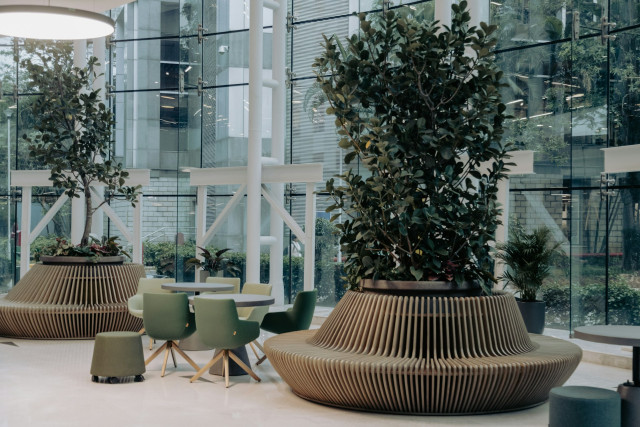
The Role of Biophilic Design in Enhancing Affordable Housing Environments
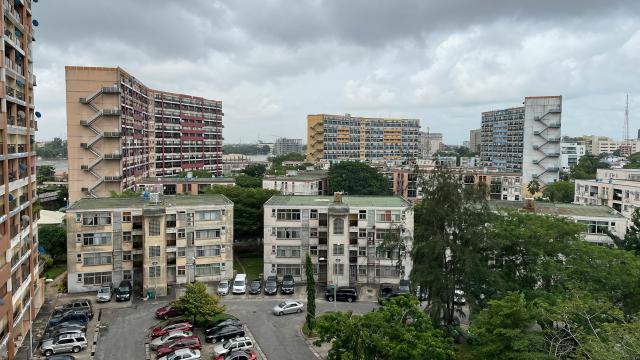
Home is not just a roof over one, it is a resource to health, well-being, and community. As the residential maps of cities continue to expand and populace to increase the need of affordable housing has become severe. Affordable houses have been characterized by little design, functions, and design concentration on the total well-being of residents. Although this utilitarian approach fulfills purely shelternetary requirements, design can have a great influence on the physical and mental health. In recent years, the theory of biophilic design, an architectural and planning philosophy now taking more prominence that focuses on human connections with nature, has been adopted as a revolutionary approach to understanding the affordable housing space.
By incorporating elements of nature occurring in the built environment: natural light, vegetation, water features and materials that invoke a sense of the natural world biophilic design has proven to enhance mental health, boost productivity, promote sense of community and, in some cases, reduce healthcare costs. This means that the biophilic design idea can revolutionize housing the poor segment of the population by prioritizing the well-being, rather than minimum construction. This blog discusses how biophilic design can make the environment of affordable housing better, what advantages does it have, and potential issues and opportunities associated with it.
The Health and Pollution Positives of Biophilic Design
The human well-being is one of the strongest aspects of the biophilic design. Innumerable research studies have indicated that a feeling of nature is less stressful, lowers blood pressure, and improves mental well-being. Individuals that dwell in an environment where they can access greenery, natural light, and fresh air also report increased cases of satisfaction and decrease in anxiety and depression. These are not luxurious but bare necessities, particularly to the low-income populations who are gathered in disproportionate numbers exposed to environmental stressors like noise pollution, and overcrowding. Introducing such elements into affordable housing, therefore, can be, not only an architectural measure, but also a public health measure.
Biophilic design also has social advantages as it results in better communities. Green spaces, courtyards, and gardens are shared enabling interaction, cooperation, and give the possibility of a shared ownership. The space helps residents to spend time outside and develop a relationship with other residents and the healing effect presented by nature. In affordable housing ventures, where the residents are predominantly economically and socially disadvantaged, having such community-oriented areas present can aid in making collective resilience more robust and can serve as a preventive measure against feelings of isolation.
Biophilic design fits well with sustainable construction in terms of environmental design. Natural ventilation and maximum daylight use along with local, natural materials contributes to the less dependence on artificial systems of energy consumption. This means cost saving in the long run by respective residents in the case of affordable housing since most of the residents end up spending much on utility. Also, incorporating vegetation in housing can enhance biodiversity in cities, alleviate heat-island effect, moderating air pollution and lead to healthier and resilient cities.
The interrelationship of human and environmental well-being is why biophilic design is not an exercise in opulence but a requirement. By making the naturalness of connections a priority, an environment where people and ecosystems can thrive together can be fostered instead of merely a solution of providing shelter to the person.
Biophilic Design as a Tool for Equity and Inclusion
A critical aspect of biophilic design in low-income housing is the possibility to reduce inequality of access to nature. Studies repeatedly indicate that communities in the low-income and poor/marginalized categories have decreased access to green and park space and healthy environmental conditions. This gap is a contributor to health inequity, which maintains a cycle of disadvantage. By integrating the concepts of biophilia within affordable housing, architects and policy makers can have a monumental influence in alleviating such discrepancies and provide all individuals, irrespective of their economic status, with a chance to utilize the healing properties that nature can offer.
Biophilic design also brings dignity and inclusivity with housing set-ups. There has been a stigma against affordable housing also historically, it has been treated previous as lower-standard housing or undesirable housing; it is lower-quality or undesirable housing in comparison to market-rate developments. By incorporating natural materials and planning consideration into low-income housing, this places it to a new level beyond just the typical, utilitarian aspect that housing usually entails, giving its residents something to be proud of that is also aesthetically pleasing and comfortable. It is a feeling of dignity which can impact deeply psychologically, building the sense of personal worth and a stronger feeling of community.
In addition, biophilic design addresses the issue of cultural inclusiveness since the spaces designed appeal to different cultures and their connections with nature. Gardens, communal courtyards, or areas to be used in urban agriculture or anything like them could mean a lot more to one community than a different community. Including them as part of the affordable housing would facilitate the creation of culturally responsive housing: such that housing arrangements would center on the lived lives of resource possessors.
Equity is also crossed inter generationally. When children have access to natural environments they grow up fit cognitively, they are creators and their bodies are physically fit. In old age, access to green and natural light may help seniors in mobility enhancement, lessen feelings of isolation, and even increase lifespan. By keeping inclusivity in the design, biophilic affordable housing can serve as a means of supporting families and individuals throughout the lifespan to ensure that as many people as possible can take a benefit of the healing and unifying powers of nature.

Challenges and Barriers to Implementing Biophilic Design in Affordable Housing
Although it has a very convincing list of advantages, there are limitations to using biophilic design with affordable housing. One of its greatest obstacles is the price. Though a certain number of biophilic elements like natural ventilation or strategic usage of daylight can save the costs in the long-term, the upfront construction costs can be more expensive than usual ones. Due to their limited budgets and funding, developers of affordable housing can find it hard to justify expenditure on what is considered non-essential features despite their long-term health and economic benefits.
Land availability and city stillness is yet another challenge. In most cities, the affordable housing is built on small/restrained sites wherein it is challenging to develop large green areas. Vertical gardens, green roofs, and compact courtyards can prove as alternatives to this, yet such options need to be designed and maintained with care. Without the necessary maintenance, biophilic elements will decay, causing dissatisfaction of residents or increases in maintenance expenses.
There are barriers that are regulatory and policy frameworks. The more creative design features of green wall, rainwater harvesting system, and community gardens may not be supported by building codes and zoning rules. Moreover, there is a strong tendency in housing development, public health and urban planning towards silos, which make it difficult to work in an integrated and holistic manner, to streamline the interventions. The solution to these gaps is greater cooperation of architects, policymakers, and communities.
There are also perceptual problems and cultural problems. Developers, funders, and even residents might not recognize the worth of biophilic characteristics at first because there are more urgent priorities that need to be addressed such as affordability and unit capacity. Outcome Indicators the way to overcome these barriers is through education, advocacy, and demonstration projects that spell out in practical terms the health, well-being, long-term affordability benefits of biophilic design.
These issues are very severe, but not irreconcilable. Throughout ingenious thinking, favorable policy, and inter-sectorial cooperation, the obstacles to the use of biophilic design in economically viable housing can be rendered down little by little.
Case studies and examples of biophilic affordable housing
There are great examples found worldwide of how the concept of biophilia is being successfully implemented in affordable housing. These projects serve to show that natural connections are possible not only to be realized as being within the limits of the budget but being in different contexts as well.
In high-rise Singapore, extensive urban density and land shortage have seen the use of green terraces and urban plant walls in public housing developments as a way of bringing the greenery indoors. Such features do not only make the urban environment beautiful but also act as places of meetings, thereby promoting social cohesion among the residents. Through this example of Singapore, it is possible to see how biophilic principles can be luxuriantly applied to the needs of large populations and still maintain affordable prices.
In United States, there are some affordable housing developments with green roofs and community gardens and natural materials. Examples of this type of development can be seen in such cities as Portland and New York, where manufacturers have incorporated rooftop soil farms into their urban settings that provide both residents and visitors with easy access to a supply of fresh food along with space to socialize and learn about farming. These initiatives are examples of how the positive colors of biophilic design extend through different formations of advantage, including food and health to more neighborhood.
European nations are also on the forefront with biophilic measures in low cost housing. In the Netherlands, eco-villages have been developed by housing cooperatives where affordability, eco-friendly features and biophilic design have been achieved. They consist of ecologically diverse communities with shared communal gardens, renewable energy sources and natural water management to provide a self-sustainable surrounding that benefits both organisms and nature.
Biophilic affordable housing is not just an ideal in these case studies but a workable presence. What these cities and communities learned, other cities and communities can learn as well, as long as they apply biophilic principles to their own specific situations, which show that affordability and biophilia are not mutually exclusive.
The Future Biophilic Design in Affordable Housing
In the future, there is the prospect of biophilic design in affordable housing becoming more widespread as word of its positive effects spreads and urban governments contend with the various crises of housing shortage, communal health, and the climate. Advances in technology are also making changes to your space in terms of biophilic features more affordable and accessible such as cost-effective green wall systems as well as smart design tools that have the ability to maximize days light and airflow. As such innovations develop further, they will help affordable housing initiatives implement biophilic concepts to scale.
Policies and planning will also be determinants of the future. Governments and housing authorities can influence the development of affordable biophilic housing by providing incentives and subsidies, relaxing building codes, and changing building codes to place emphasis on nature connections. Public-private partnerships can be a worthy contribution, a mingling of funds and expertise of business-oriented developers with the judicious eyes and policy affirmations of regulators and policymakers. On top of this, bottom-up action by the citizens themselves and neighborhoods can influence biophilic incorporation in low-income housing projects, meaning that design choices are based on the local parameters and needs.
Integration of biophilic design also correlates with the larger scale changes in the city development toward sustainability and resiliency. With climate change heating up, cities will have to have housing that is not only affordable, adaptable, and environmentally responsible. Biophilic design has benefits to resilience through its contribution to heat alleviation, storm water control and biodiversity. Such ecological gains are doubly important in affordable housing situations, where residents tend to be most at risk to ecological hazards.
Culturally what is seen in biophilic design in affordable housing is that there will be an increase to a greater focus on co-creation. Residents too have a part to play in creating biophilic surroundings, and this could be a strategy as easy as running a neighborhood garden through to contributing to shared space design. This “participatory approach” will ensure that the biophilic features are not merely paper-driven and are maintained and grounded in the real-life experiences of the people under this lived experience.
What lies ahead is that affordable housing with a biophilic design is an intersection of need, invention, and hope. It envisages a vision of housing beyond a mere provider of necessities but housing that enriches health, dignity and community, producing spaces that people and nature mutually flourish in.
Integrating Biophilic Design with Affordable Housing Policy
There is a need to provide robust policies that support biophilic design as a mainstream practice in affordable houses to ensure that it reaches the masses. Although radical architectural hipsters and developers are able to adapt the features of housing more intimate with nature, systematic deployment involves intentional planning on the municipal, regional, and national scales. Governments can lead through the development of incentives, e.g., tax credits, grants, or special expedited permits, in addition to developers who implement biophilic concepts. Policymakers can make the lure of the green roof, community garden, and natural ventilation and daylight more ubiquitous by removing financial and bureaucratic obstacles to their routine inclusion in affordable housing.
Also, zoning can be improved so that affordable housing projects are not concentrated into those parts of cities that have poor access to green infrastructure. The policies that mandate or reward the presence of green space in the projects or even access to the areas with public parks may considerably improve the quality of life of the residents.
Closely coordinated cooperation among the housing authorities, the departments of public health, and urban planners is also warranted, since biophilic design is a point of intersection among these professionals. By incorporating the preservation of health and the environment into the housing policy, any government can make it impossible to view biophilic design as a luxury housing toy and consider it a housing justice component.
The final point is that application of biophilic design in affordable house policy will reconcile the distance between good-looking architecture and residential reality so that all can receive the benefits of nature-inspired life.
Conclusion
The muster that biophilic design offers to the efforts to improve affordable housing environments is overwhelming and pressing. Biophilic design improves important health, equity, and sustainability outcomes by reconnecting residents with nature and requires little-to-no upkeep. By turning shelter into spaces of dignity, health, and vitality, biophilic design is helping to make affordable housing foundational sources of positive societal change.
The issues of cost, availability of land, and regulation will likely still be able to inhibit this, but with proper innovation and enabling policy, these obstacles may be cleared through collaborative design. And case studies in quite some places across the globe show that when it comes to the fruition of affordable housing that is also biophilic, it is there and not a pipe dream.
Biophilic design provides a promising solution to these two menaces facing societies fifth: housing affordability alongside environmental destruction. It reminds us that housing does not only mitigate us against the elements, but also keeps us in touch with nature that nourishes us. In doing this it lifts affordable housing beyond being a service of necessity, in a statement that all people, regardless of income, have a right to live in settings which reinforce health, beauty, and belonging. Whether it is a boutique hotel or an affordable housing apartment complex, understanding how one can design to achieve a biophilic effect is something that everyone needs to be aware of in the future of affordable housing.
Also Read: Trends in Minimalist Home Design



-3dkuLgKhRD.jpg)
-49HupTvwDD.jpg)



LEAVE A REPLY