

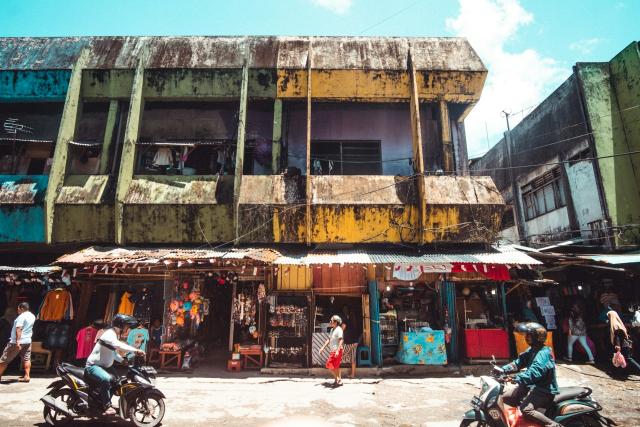
Barter Systems in Slums: When Cash Isn’t King
It is easy to think that every economic activity revolves around cash, especially in today's digitized society. Nonetheless, in some of the world’s most congested urban areas known as the slums, traditional economic rules do not always apply. People inhabiting these peripheral spaces have limited banking access and an irregular cash flow, leading them to discover new forms of exchange and survival. Of the many barter systems—the direct exchange of goods or services void of money—holds the most promise. Although it seems outdated, barter systems do exist, particularly in regions where poverty, unemployment, and informal settlements are the norms.
The explanation for the unbelievable suffering of barter practices in slums is straightforward: people default to their available options when they cannot easily access money. Informal financial systems typically exclude slum residents because they do not possess identification documents, stable sources of income or fixed addresses. Furthermore, they usually face high expenditure living in comparison to their earnings which leads to unending cash shortages. In such a situation, barter complements cash stricken scenarios and offers immediate control to people. They can obtain what they want by giving out what they have in terms of goods, skills or time. Rather than being primitive or inefficient, barter systems in slums are highly advanced, sociable and well adapted to the local needs.
These systems develop an unparalleled bond of mutual reliance because trust emerges as a vital form of collateral. Transactions are not exchanged based on stringent monetary value but rather on perceived utility and fairness relative to the local context. Although dweller creativity tends to stretch the limits of barter, it does reflect an underlying harsh necessity. This blog post discusses how barter functions within the confines of the slum, the types of exchange dominant in it, the influence of social trust, and the prospects of these exchange systems with the shifting economics.
Everyday Exchanges in Slum Communities
In ghettos with little access to paid jobs and where basic needs have to be met immediately, barter systems already exist in an anatomical form. People offer each other various tangible and intangible goods that aid moral support or the goods and services that money does not guarantee. Encounters that take place have terms of endearment. For example, a family unit hypothetically possessing surplus of rice could barter it for cooking oil or fresh vegetables. A woman taking her neighbor’s children could barter the service for food or clothes. Those services form the basis of every ghetto’s economy.
This form of exchange works based on barter's flexibility. Where cash is not readily accessible, currency becomes the next best alternative. A person could repair a leaking roof in exchange for some secondhand clothes. Senior citizens claiming to need help with fetching a bucket of water let children offering tutoring in the neighborhood. As valuable as resources set aside for formal markets, these unmonitored forms of exchanging assets are constructed outside of the bounds of sinking economies, taxation, and monetization. Alternative currencies are boundless and unrecorded, but of greater aggregate worth by virtue their underlying purposeful context presented. Economies thriving on collective support require citizens to cooperatively and incessantly depend on each other, thus placing secret value on such economies.
Vendors and micro-businesses in slum areas sometimes make use of barter systems. A vegetable vendor could offer surplus crops to a fish vendor in exchange for fish. A cobbler might perform pedicure and manicure services for a barber and, in return, the barber would tend to the cobbler’s sandals. These barter systems are unstructured. They are free-form and can adapt to local provisions and requirements. In particular, these systems can be effective in slums where there are strong bonds within the community and a deep-rooted sense of belonging to the area.
Such transactions serve to satisfy primary material needs but does much more by strengthening relationships among the people. Individuals must be trustworthy; if people abide by unwritten contracts, they gain social currency which, in many instances, is far more beneficial than earning money. Because barter is, by definition, informal, it is ideal for places where red tape is a nuisance, or even absent. In many slum society, people operate in a cocooned economy—one that exists alongside the formally recognized economy but is self-sustained within its own pace and logic.
Informal Work and Barter
Service exchanges, as well as informal work, take place in addition to the common barter of goods in slums. Lacking regular jobs or steady pay, many slum residents use what they can do in exchange for essentials. The agreements made in free trade can be either short-term or last for years, depending on the circumstances and what both parties gain. When both parties understand the value of what’s being traded, this model works well.
For instance, residents in temporary houses often rely on barter in building and construction. A skillful laborer may assist his neighbor with the hut in return for meals, household items or by helping on another project. Some electricians or plumbers are willing to exchange their work for food or care for your children. Renting without a contract means the arrangements are flexible, do not require a down payment and can happen fast. Trading in this way establishes a group of workers not connected to traditional jobs or monetary systems.
Services are often bartered by women who live in the slums. Tailoring services may be provided by a woman in exchange for school items, with the rest of the materials going to her own family. Exchanging housework such as cleaning, washing or cooking, for goods or kind acts, is common. Local services in small, friendly neighborhoods usually ensure that clients are less likely to be misled or cheated.
The barter-based approach to labor includes care and learning for children. Children might receive lessons from a tutor in exchange for food or assistance with errands. Certain children may buy things from vendors and shops using goods they have, rather than cash. Through these activities, young people can learn to be responsible and help their families, when jobs are not easily found.
Without the same job security or laws as formal employment, they still give employees social security and flexibility. Most of the work is done in the area, so goods don’t have far to travel and nearby residents feel more involved. Individuals in these arrangements work on flexible schedules and do not need to obey strict company rules. Rather, they start trading when they agree, can help and there is a real need. This results in a shaky kind of economy that works where the main economy falters.

Social Trust and Reciprocity
The simplest form of commerce in the slum societies is based on social trust. Unlike formal economical interactions governed by contracts, laws, or institutions, barter: the simple exchange of goods, for example, relies heavily on individuals and the network of relations they share. Trust, in the context of a slum, is not exactly a luxury but a survival tool. Exclusively, trust builds on mutual experiences of suffering, migration, and exclusion, hence, a community is formed on strong grounds that enable people to rely on and credibly affirm inter-personal relationships.
In barter, reciprocity is not always instantaneous. A favor granted may be repaid weeks or months down the line depending on a myriad of factors. A neighbor with construction tools may lend them out and expect to get labor in return for a different project down the line. A woman suffering from another’s illness may assist the family who is ill and expect to get the same in return during her time of need. This form of barter rests on unspoken agreements and enhances the glue that holds communities together.
Elders and community leaders also have significant responsibility in these arrangements. They act as informal arbitrators because, more often than not, they step in to resolve conflicts or guarantee that agreements are upheld. Their presence creates a protective layer of responsibility where one would expect institutional supervision. In numerous instances, social reputation functions as both a medium and a security. A person deemed to be unreliable may find themselves cut off from barter opportunities, rather quickly. On the other hand, a generous and reliable individual is likely to become a linchpin in the local economy.
In impoverished areas, social capital is often more valuable than monetary wealth. Social trust enables access to goods and services that cash-strapped individuals would otherwise struggle to afford. This trust facilitates economic participation for single mothers as well as elderly and disabled persons in ways that formal employment or state-supported systems do not. The capacity of this informal safety net to mitigate poverty and financial exclusion is astounding.
Nonetheless, this system based on trust also has limitations. It can be tested by changes in the population, external shocks such as inflation or eviction, or social unrest. Regardless, the existence of strong interpersonal ties makes sure that barter can still function as an economic system. It shows how economic behavior can be quite social, motivated by not only financial gain but also compassion, mutual aid, and the necessity to live together.
When Technology Encounters Barter
Even though barter was viewed as a simple system in the past, more and more, modern slums integrate digital technologies with the informal type of economies seen there. People in low-income neighborhoods also use mobile phones and these devices are helping to arrange barter exchanges. It is simple for citizens to promote what they wish to trade using messaging services and social media. A store might indicate they want to give away extra food in exchange for someone to help out at home or drive them somewhere. You can sometimes get minor work done on your vehicle by handing over your old electronics.
In certain communities, barter forums have been set up online, just as you might find in a local classifieds section. They take advantage of sites like Facebook and WhatsApp to help match needs and goods, so bartering can happen with others outside the community. Thanks to technology, users can now barter more efficiently, in less time and join a larger pool of possible exchanges. Because online bartering provides a bit of privacy, people who find face-to-face trading awkward may feel more encouraged to join in.
Even in regions that use mobile payment services such as M-Pesa or Easypaisa, some people will barter with the help of digital wallets. Frequently, someone might arrange to have training in return for mobile credit or a bit of digital money. Such hybrid transactions prove that there is little difference anymore between cash, digital and barter approaches in today's slums. Consumers regularly change their habits to achieve greater comfort, protection and efficiency.
Having technology makes it possible to save records of transactions that help develop unofficial ways to judge someone’s reputation or ability to pay later. Because of this, trades are likely to be fairer and more consistent, helping all parties trust the market. Nonetheless, only a small part of slum populations can use these tools because have limited access to infrastructure, education and technical knowledge. The objective is to make sure digital transformation doesn’t create greater separation between people with technological knowledge and those without.
Barter isn’t just an old-fashioned way to exchange things—it is changing over time. As people in slums use mobile technology more, barter may become more like an organized market and easy to use for trading. It highlights that innovation can grow without a business being rich or formal. Often, it reaches its peak on the outskirts.
Children and Youth in Barter Economies
Sometimes, when bartering is the standard in slums, kids and teens are pushed into these systems simply to survive and other times by joining with family or friends. If young people do not have pocket money or cannot use digital banking, they start early on by exchanging small things, their time or personal skills for what they want or require. A child may offer snacks or school supplies to someone else or help an adult as payment for being fed or getting a ride. Being involved in these activities introduces kids to basic money matters and helps them build confidence, negotiate and adapt too many situations.
A number of elder children help out in family transactions by contributing in bartering. A young man might support with taking goods to the marketplace so he can have more stuffs to eat. Exchanging clothing or getting help with homework is one way a girl might braid another child’s hair. These deals are sometimes tiny but help young people stay connected with their community and become more responsible.
There is a risk that their participation can be abusive if watched carefully—especially if young people are required to do more than they should or if they are treated unkindly because of their age. At the same time, music can act as a source of hidden learning, giving people skills they wouldn’t usually get in academic settings. Taking part in barter teaches youth that aid and hard effort can have worth, even if it is not counted by a number on a bank bill. As a result, children and teens hold up barter economies by being supportive, flexible and learning quickly without much talk.
Conclusion
The barter system in slum areas certainly goes beyond being merely a reaction to poverty; rather, it is a reflection of the resilience, spirit of the community, and human ingenuity. Where there is little cash, no formal employment opportunities, banks and financial institutions, goods and services are directly exchanged. These systems are based on trust, mutual benefit, and the urgent need to fulfill everyday needs. A form of payment in which work is performed is paid for with equipment, while a service is offered for goods, the barter system accommodates easily and inclusively to substitute monetary payment.
Barter certainly has its weaknesses such as a lack of scalability and vulnerability to exploitation, but this practice has more merits. Barter helps to reinforce social integration, strengthens already vulnerable members of the society to become economically active participants, and fills vital gaps created by ineffective state services and unreachable markets where there is excessive poverty. It is also adaptable; as technology gradually seeps into slum life, the traditional barter system is gaining new forms and expressions, merging with modern tools.
In poverty-stricken regions, barter is more than an economic strategy; it is a social contract that prioritizes human relationships over monetary ones. It sustains hope where social systems are failing, serves as a reminder of what solidarity looks like in times of exclusion, and teaches us how alt economies can develop organically. In this case, arms are offered instead of mercenaries. We, marketers, community builders, funders, and designers of society, should learn from this.
In a world where scalability and efficiency reign supreme, barter showcases the fact that communities still do care, cooperate, and show kindness to others—these realities are often overlooked. Supporting and understanding these systems has much to offer in terms of more solid insights toward urban resilience, inclusive development, and the myriad of ways people navigate economies when cash does not reign supreme.
Also REad: A Review of Slum Housing Policies in Mumbai



-shtTqaPktk.jfif)







LEAVE A REPLY