

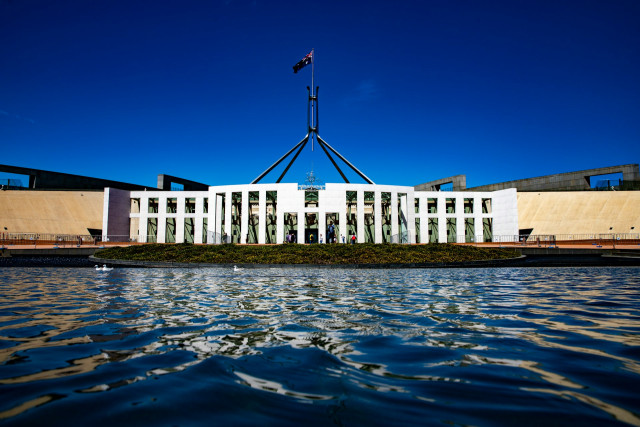
Australia's Housing Future Fund: A Model for Sustainable Housing Investment
Every country is facing the problem of providing safe, secure, and affordable housing for all citizens. Urbanization, population increase, climate change, and inequality all work together and expose the problems in housing systems created for a different time. Australia, like many other developed countries, is facing a housing problem. Marked by outrageous property prices, rental stress, and with no affordable housing for many, Australia is now in an ever deepening state of homelessness. In a bold move, the Australian Government has proposed the Housing Australia Future Fund (HAFF) for sustainable long-term investment in housing.
Withdrawn from the construction of the home, the HAFF is a shift in how the housing crisis should be addressed. Rather than solely depending on short-term spending programs, the HAFF focuses on the creation of an investment fund that is designed to generate and reinvest returns from housing. This investment approach, besides ensuring continuity, is a good model for other countries. The HAFF is founded on fiscal sustainability and equity to illustrate how Australia’s long-term housing policy is stability focused and inclusive.
This blog goes over the vision and the details of the Housing Australia Future Fund. What is its structure? What impact does it have? What challenges does Australia face? Why does it substance globally? Why is the HAFF model unique? What does Australia demonstrate for the world?
The Vision Behind the Housing Australia Future Fund
HAFF is the first of its kind conceptually in Australia. Housing is recognized and catered for at a national and a structural level. HAFF attempts to provide a seamless and permanent solution to the Australian housing deficit. While the property market may be heating up, the most vulnerable Australians must be able to access affordable housing.
This is captured in the fund, as it maybe, in its most abstract dimension. Housing is infrastructure and it is an opportunity, a community, and more important, it is people. Adequate housing is a requisite to the social, economic, and political advancement of a community. And when housing is absent, it widens the social gaps. The fund looks at housing in the context of the broader national project: one that weaves in climate adaptation, energy efficiency, and urban sustainability.
Through the sustainable housing development, HAFF makes sure that Australia is not only focusing on the supply of housing at the moment, but is also geared up to tackle future demographic and environmental challenges. In this light, the vision goes beyond the question of ‘affordability’ to also include the sustainability and livability of Australia’s cities.
The Structure and Function of the Fund
The Housing Australia Future Fund is set up like a sovereign investment fund. The government one-off invested billions of dollars which the fund aims to strategically manage to accumulate worth over time. These earnings, which are not picked up for general expenditure, are reuse solely for housing purposes, which include the building of additional affordable and social housing units, maintaining the existing housing stock, and funding services for the homeless.
The design has two main advantages. First, it ensures profitability. Unlike one-time donations or temporary budgets, the HAFF consistently earns income that can be reinvested each year. This guarantees predictability and stability in housing programs. Second, it absorbs the impact of political changes. Changes in government priorities usually impacts the housing policy. However, with the HAFF, the funding always remains the same regardless of the political climate.
The HAFF also addresses issue s of quality by avoiding investments in poorly designed housing which claim to provide short-term relief. Such housing increases maintenance costs, energy use, and environmental degradation. Instead, it physical invests in community-oriented, climate-resilient, and energy-efficient housing. The fund's returns help to finance collaborations with private developers, community housing providers, and state governments, which furthers the fund’s impact. The HAFF case demonstrates how collaborative delivery frameworks enable the mixing of public funds for investment with social outcome delivery in financial social innovation.
Mental Health Stresses
Housing availability crisis Australia is a dilemma with multiple parts. Many people in middle range incomes find it increasingly challenging to own a home with the increasing costs of houses and rents in cities like Sydney and Melbourne. In regionals areas a lack of appropriate infrastructure and limited supply of houses contributes to the increasing cost. At the same time, underprivileged white collar families, Indigenous people, and the homeless suffer the most.
The Australia Housing Future Fund (The Fund) focuses on the most immediate and critical housing needs. Construction of affordable homes will provide a lifeline to tens of thousands of families and individuals. By subsidizing the cost of social housing, the Fund offers homelessness support through reintegration and stability. The Fund also addresses groups such as Indigenous Australians who lack access to adequate housing. The foundational framework HAFF provides is essential to starting the disentanglement of decades of underappreciated inequalities.
There’s another approach to consider that deals with housing in relation to community development. New housing projects incorporate public transport, schools, healthcare and places of employment to ensure residents are not isolated and are connected to the rest of the community. Instead of merely providing shelter, this approach attempts to promote social integration and moving up in the social ladder.”
The Economic and Social Impact
The impact of the Housing Australia Future Fund extends beyond merely providing houses. It is also intended to change the economic and social landscape of the country. From an economic perspective, the HAFF provides a boost to the construction industry, offering work to thousands of builders, contractors, and suppliers. This in turn provides jobs in other sectors such as manufacturing and retail, thus expanding the economy.
The social impact of having stable, affordable housing is nothing short of revolutionary. Secure housing has a positive impact on the health of families, as they are no longer exposed to overcrowding, unsanitary conditions, or other social determinants of health. Children growing up in stable housing are more likely to succeed in school and beyond. A community with stable housing suffers less crime and more social and political participation.
The HAFF also helps in saving money in the long-run. When someone is homeless, the government has to invest in health care, social services, and law enforcement. This is extremely expensive. The HAFF is socially responsible and it makes fiscal sense. The HAFF also boosts Australia’s international image. Many countries are trying to solve the financial constraints of affordable housing. Australia is trying to solve the issue with compassion and financial discipline having the HAFF.
The Housing Australia Future Fund is heavily praised, but also has some challenges. Some think the fund is too small to help with the housing issue Australia is facing. With the demand being so high, the HAFF is unable to supply homes. The market can also be an issue. The money for housing available to the HAFF may greatly depend on the state of the market. Having the financial outcome depend on the market behavior of housing is not reliable.
People also argue about the involvement of private developers in delivering housing. While partnerships may speed up the construction…and also capture the value of construction…there is a danger the profit making motives of the private sector will overshadow the affordability goals.. The problem is the absence of effective regulations…and accountability…will compromise the integrity of the Fund. Some housing advocates who praise the Fund say it is the first step and still needs something broader such as change in policy regarding rent control and land use…and also measures to control speculative investments in the real estate sector. In their view, the problem of housing in Australia is much broader, and the Fund by itself is not the answer.
The criticisms brought forward by such advocates do capture the essence of the Fund…however, they…are not the entire solution. They still need to be nested in a broader integrated coherent housing policy.

A Global Model for Sustainable Housing Investment
The rest of the Fund is their endorsed vision of Australia and its lessons for the world. The Fund has the potential to set the baseline for critical investments in housing and to promote the enduring fundamentals of social equity and financial innovation. The HAFF helps shield volatile political cycles from enduring mechanisms that include affordable housing and climate action. It shows for those bending fiscal limits how investment funds constricts. It also shows how for societies confronting climate change, affordable housing needs to change.
There is also evidence that housing is an investment rather than a disbursement due on return. Australia has achieved social protection and economic growth with a proactive change from spending on housing as a cost to investment. Clearly, more nations can be inspired to embrace the same model, and a shift from investment in housing to sustainable investment in housing will occur on a global scale. It is possible to replicate and adapt the principles appended to the HAFF to tackle the shortage of housing in both the lesser and more developed nations and, in doing so, will extend safe, secure and sustainable housing to millions more people.
Community Participation and Social Inclusion in Housing Policy
The Housing Australia Future Fund (HAFF) has the potential of creating community involvement and social inclusion in housing policy and this is one of the most powerful aspects of this strategy. Housing is not merely about physical infrastructure, but it is about individuals, family and communities that are constructed by them. By identifying this, HAFF will be able to overcome the constraints of the top-down policy and, instead, accept a strategy that places power in hands and addresses the actual needs of residents.
Community involvement makes sure that the housing developments are not made solely but together with the people. This involves involving people living within the areas in making decisions regarding design, location, amenities and sustainability features. Housing projects should be successful since most communities are likely to be involved in the planning process and this makes the housing projects more related to the realities of local communities. To give an example, proximity to schools, healthcare and transport systems is also a priority that is lived and may be ignored by centralized planning.
The mission of HAFF also focuses on social inclusion. Some population groups experience a disproportionate housing insecurity in Australia, such as Indigenous Australians, refugees, older women, and people with disabilities. In the absence of specific mechanisms to overcome these disparities, even well-endowed housing initiatives will continue to be reinforcing the exclusion. By setting aside resources to these vulnerable groups, HAFF facilitates equity and shows that housing justice should not be limited to affordability alone, but also should address systemic obstacles.
The implication of inclusion housing strategy is the establishment of various communities as well. The development of mixed-income neighborhoods where low-income and middle-income residents can live close together can contribute to the reduction of the level of segregation in the society and the increase in unity. Instead of isolating poor families in remote or the not well-served areas, HAFF can ensure that they become a part of well-balanced neighborhoods. This reduces stigma, enhances the opportunity and augmented social bond.
Building Climate-Resilient and Green Housing Futures
One of the main characteristics of the Housing Australia Future Fund is the focus on sustainability. Housing in the 21st century can never be deemed adequate without being environmentally responsible and climate-resilient. Climate change poses an increasing threat in Australia such as bushfires, floods, and heat waves that directly affect the living and safety of homes. The HAFF offers a chance to deal with these hazards and form international standards of housing in a sustainable way.
Green housing is an environmentally friendly method of construction and habitation. Housing projects can also reduce emissions drastically by installing energy efficient appliances, solar panels, water recycling systems and green building materials which reduces utility costs to residents. In the case of low-income families, lower energy costs will be a huge relief, and sustainability does not only represent an environmental agenda, but a social equity solution.
The issue of climate resilience demands the structural design of houses and neighborhoods that can withstand natural calamities. It includes harder building codes, flood-proof structures, designs that reduce heat like improved insulation and shading and city planning which does not subject the environment to vulnerable areas. Resilience is not a choice in a country such as Australia; it is a necessity considering that the risks of climate are already evident.
Besides, long-term affordability is encouraged by sustainable housing. Energy-efficient, durable, and well integrated homes into the public transport systems save the costs experienced by the inhabitants over time. They reduce government spending on health services, energy subsidy and disaster recovery too, and resilience is also an effective economic policy.
The HAFF also helps Australia in its obligations to the international climate agreements. Incorporating sustainability in housing, it shows that climate action and social policy can be complementary. To other countries, this would make a worthy precedent of the integration of housing policy and environmental responsibility.
Notably, green houses are not just all about technology, but the ability to create sustainable communities. This involves the creation of greenery, walkable communities or neighborhoods, and the availability of public transport, which enhances quality of life, but has a lower environmental impact. HAFF will aid in shaping the future of urban life by designing homes in a more sustainable manner.
Provided that the Housing Australia Future Fund is set up with a solid focus on the principles of climate resilience and sustainability, it will not merely address the current issues in housing, but will also equip Australia with the challenges of the environmental environment in the future. By doing that it will become an example of how countries can unite social justice, economic growth and climate responsibility in a single transformative policy.
Conclusion
The Housing Australia Future Fund is a revolutionary step to the way countries address the issue of housing crisis. Instead of making use of short-term expenditure, it has created a long lasting, self-sustaining system that guarantees a steady investment in social and affordable housing. This will be a sure way of remaining stable during political cycles and establishing a secure flow of resources to meet the needs of vulnerable populations.
Its influence, though, is much farther than the provision of homes. Offering safe and affordable housing, the fund reinforces the wellbeing of individuals, creates healthier and more resilient families, and minimizes social inequalities that harm the social cohesion in the communities. Simultaneously, it brings about economic payoff because it leads to construction stimulation, job creation and reduced long-term social expenditures that are associated with homelessness and housing inadequacy. By so doing, the fund improves social and economic resilience, which will provide a strong example of how governments can consider equity, sustainability, and fiscal responsibility as a part of housing policy.
The HAFF is a timely model to emulate. It shows that despite challenges in financing infrastructure, a government can prudently fund social amenities. It also shows that housing policy can be innovative, affordable, and sustainable. And more importantly, the HAFF demonstrates the value of long-term systematic planning in responding to the most pressing challenges of our times. To the rest of the world, the Fund is an emblem of Australia’s desire to support neighboring countries that experience housing shortages. It demonstrates how sustainable investment in housing is necessary to strengthen and build inclusive and resilient societies.
Also Read: Policy Recommendations for Sustainable Slum Solutions



-3dkuLgKhRD.jpg)
-49HupTvwDD.jpg)








LEAVE A REPLY