

Are REITs the Future of Affordable Housing Finance in Pakistan?
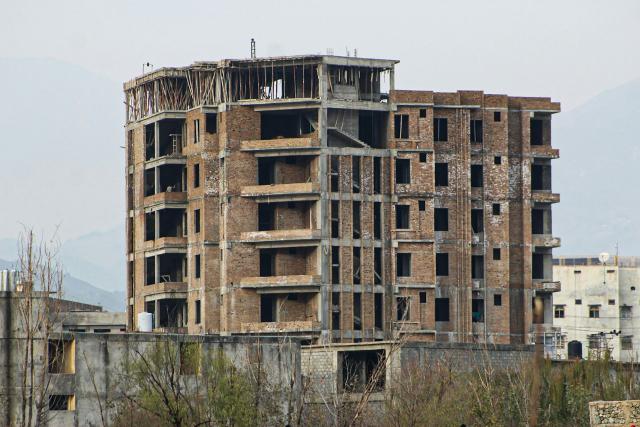
Millions of Pakistanis are still unable to have a dream of having their own homes. The fast rate of urbanization, steep construction prices, inflation and unavailability of long term financing opportunities have seen an increasingly high segment of the population being priced off of the housing market. The demand of the affordable housing in Pakistan runs far beyond its supply notwithstanding government housing schemes and occasional efforts by the private sector. The estimates indicate that the nation experiences more than 10 million shortage of housing units and the number only keeps increasing annually.
In this regard, Real Estate Investment Trusts (REITs) are considered to be an optimistic remedy. Though historically, they were regarded as commercial real estate assets of the highest grade only, REITs are currently being entertained as means of funding the development and expansion of low-income housing. They can lend themselves as a potentially strong instrument of addressing the housing finance gap in Pakistan due to their capacity to pool funds, invest wisely and have regulatory oversight.
By 2025, REIT is gradually growing in Pakistan. The regulatory changes, the growing appeal of investors, as well as the formalization drive of the property industry have predisposed REITs into becoming more than the preserve of high-level commercial investments. Now the big question is how these vehicles can be readjusted to the affordable housing market, a field that has been ignored by institutional investors as well as developers to date.
So how might REITs transform the future of affordable Housing finance in Pakistan, what are the beneficiaries, and what transitions in systems will be needed to bridge the gap between vision and reality?
Study of the PROPAREIT I the Case for Affordable Housing REITs in Pakistan
The housing crisis in Pakistan is more of access, financial and sustainability rather than just a numerical issue. Majority of the low and middle-income families are unable to afford or qualify to receive a traditional mortgage. In the meantime, when left to private developers, the affordable homes with a low margin are undesirable as they instead focus on luxury development that targets high earning purchasers or foreign investors.
Failure by demand and supply to match has resulted in a bottleneck in the housing market. REITs may make a decisive contribution towards this impasse. Due to funds brought together by a diverse base of investors, including institutions, individuals, banks, and even overseas Pakistanis, REITs will provide an expanding source of financing to affordable housing projects.
As opposed to traditional project finance, REITs have a long-term investment perspective thereby targeting rental yields, capital gain, as well as dividend payouts. The mission of an affordable housing REIT would be to make secure returns by establishing property housing in premium locations which would be multi-family-housing, possibly under rent-to-own or subsidized rent schemes. Unlike the luxury real estate investment where speculative profits can be achieved, these models can guarantee steady, inflation-resistant income to the investor.
The true power of the affordable housing REIT is that it allows lessening of risk and development of transparency. Such a REIT would be able to raise local and foreign capital, being subject to stringent audit, disclosure and management regulations, and to manage project accountability by working under the regulatory control of the Securities and Exchange Commission of Pakistan (SECP). It is also capable of collaborating with government housing programs, financial institutions, and donor agencies in a bid to achieve the best. Essentially, the REITs offer the financial framework to resolve one of the most significant societal issues in Pakistan the construction of homes, which the common person can actually afford.
Potential of REITs in raising Capital to Fund Massive Housing Projects
Mobilization of large amounts of real estate is one of the biggest opportunities that REITs offer. In such a country as Pakistan, where development of housing is usually disjointed and dependent on erratic cash flows, REITs provide a predictable, enforceable and transparent means of financing. In Pre-sales scheme Traditional housing development in Pakistan is susceptible to pre-sales, short-term loan, or overseas remittances. These modes of financing constrain the extent and rate of development, especially in respect to affordable housing where profit margins are less and the repayment terms take longer. REITs reverse this position through the aggregation of capital sourced over a wide range of investors and the assignment of the capital to income producing real estate property portfolios.
When REITs invest in affordable housing projects by either constructing or purchasing them, they attract an opportunity to unlock the economies of scale, reduce the unit costs as well as on-time delivery of projects. The investors will be rewarded with a source of income through the lease and the future upside when the property increases in value and the developers will have access to an inferior form of capital that is not based on current sales.
By 2025, the regulatory climate has been favorable in Pakistan to enable the formation of REITs. The reformulated REIT rules and tax incentives to institutional investors by SECP makes REIT a friendlier investment vehicle to investor with impact intent. This would admittedly allow not only the domestic banks and insurance companies, but also foreign funds, foreign development finance institutions, and foreign charitable endowments to co-invest in affordable housing REITs.
Government agencies can also be helpful to invest creditors by making contributions in the form of land or securing the investor in the form of a guarantee. When properly planned such public-private REITs would be capable of building thousands of housing units a year, particularly in urban centers with the high demand (Karachi, Lahore, Islamabad, and Peshawar). Also, REITs may aid in stabilizing the affordable housing as an asset type.
They professionalize a long-informal sector that has traditionally been characterized by a high degree of data sparseness based on rental yield forecasts using data modeling, uniform property management performed in a regulatory compliant manner. Such the degree of standardization is important in relation to attracting long-term capital and guaranteeing financial sustainability of affordable housing programs.

Creating Social Impact without Sacrificing Returns
The popular myth in the real estate investment is the idea that affordable is equal to unprofitable. This image is however shifting all through the world, and Pakistan is beginning to follow suite. Affordable housing does turn out to be a source of stable and long term returns, when it is attacked professionally. This can best be done by investing in REITs which are property investment vehicles in which income rather than speculation is important.
The rental market on the low- and medium-income level is spiking in the major cities of Pakistan. Living in cities, shrinkage of family size and high cost of buying a home have all been aspects that have led to an increased number of people demanding affordable renting houses. An affordable housing REIT that is run competently will be able to exploit this demand providing stable occupancy rates alongside rental profitability. They can contribute decently good returns as long as they are combined with humble capital appreciation and low vacancy risk.
In addition to the social profit of affordable housing REITs, such companies create significant social impact past the financial gain, which is gaining relevance as an interest to contemporary investors. These REITs promote economic growth, educational and health outcomes of the population since they help people have access to houses, provide stability, and develop communities further on. Indeed, most of the foreign REITs have constructed their brand on ESG (Environmental, Social, and Governance) norms, and Pakistan can do the same.
In addition, mixed-income housing REITs are underutilized. The buildings incorporate subsidized accommodation with market-rate or commercial units, and they offer a balance of high profitability and social inclusiveness. The model has already been put into use in such countries as India and Brazil and can be duplicated in the fast-growing urban corridors of Pakistan. The other important opportunity that can be explored is the collaboration with the microfinance organizations and community housing organizations. REITs of affordable housing may rent, or rent-to-own houses in the long-term, and partner institutions may offer vetting, financial literacy training, and maintenance of tenants. The outcome is a strengthened housing model that gives residents and investors an upper hand.
By so doing, REITs present an economic model where the interests of the investors are made compatible to the goals of national development. It is more than a housing building process, it is a process of creating culture of equity, dignity and financial inclusion.
Issues of Affordable Housing REITs in Pakistan
All is not gloomy with affordable housing REITs in Pakistan, though, as it has a potential, but a number of obstacles are in its way: legal, financial, cultural, and infrastructural. Although SECP has already taken a step forward to modernise the REIT regulatory mechanism, there are relatively few provisions and incentives to affordable housing REITs. An intense regulatory initiative would be needed to reduce the incentives of investors in maintaining a high yielding commercial REITs as opposed to socially significant housing ones.
Cost of land is among one of the major problems. The other issue is that land acquisition is a big bottleneck towards affordable housing in the urban regions of Pakistan. The shortage of affordable housing is because land taken long ago becomes very expensive to develop to the extent that speculation has become an issue, and digital land records are not available. To achieve success in this area, it is critical that REITs work with state and local governments, particularly by achieving subsidized land, zoning relief, infrastructure, etc.
There is also trust problem and consciousness. REITs are a novel idea in Pakistan that can be considered niche further when affordable housing REITs are spoken of. Still, many people, both retail and institutional investors, are unaware of their operation process, the way they can provide returns, and deal with risks. This causes uncertainty and restricts inflow of capital.
Also, there exist few experienced asset managers who know how to cope with the specifics of affordable housing, and how to select tenants, and control the rent, and how to go into cooperation with social organizations. In the absence of professional expertise in running REIT, there is a high risk of poor performance of the portfolios.
Mechanisms to finance the end-user, i.e., renters or rent-to-own buyers have to change as well. There are few potential tenants available unless there is any long-life credit or housing subsidy that can help them to get housing. The REIT cannot function without banks and the housing finance companies being a part of the overall ecosystem in this matter. Concisely, to make affordable housing REITs to be mainstream in Pakistan, it should be a collective action in several sectors: the regulators, developers, financiers, and the public sector. Only that will be able to transform a concept into a reality.
Innovation in Policy and the Future
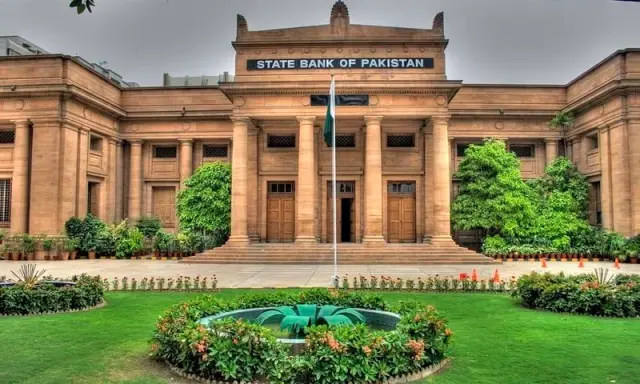
To have real change in affordable housing finance through REITs in Pakistan policy innovation will play a central role. The SECP, other stakeholders, the State Bank of Pakistan, and the government need to enhance a conducive environment to cut the risk, to reward the entry, and to align the ownership incentives in the market to the preferences of the general people.
First, the emergence of special breaks in the tax on REITs that are invested in affordable housing could end up transforming the hunger of investors, including zero capital gain tax, lower withholding tax or exceptions on property transfer. Second, faster-tracking of the REIT-sponsored affordable housing projects produced by the regulatory bodies may help cut delays and improve efficiency. Third, affordable package of land banks or leases on government-owned land over the very long run may be able to lower costs of input to the developer and allow capacity to build at scale.
Participation in the mutually beneficial framework with the Naya Pakistan Housing Program (NPHP) or other government initiatives can develop hybrid financing models in which REITs fund and manage the project, yet the state supplies land, guarantees or subsidizes end-users. This would entail a shared-risk model having greater delivery capacity. Educative awareness programs are also required to sensitize the investors and developers on the opportunities on affordable housing REITs. To demystify REITs and legitimize them as a means of both social good and personal wealth generation, it can be beneficial to provide seminars, digital mediums and collaboration with financial institutions.
On the technical side, the urban planning has to be improved, land titles must be digitalized, and building technologies scaled (including prefab construction). But above all there should be a change of thinking, affordable housing should no longer be thought of as a philanthropic endeavour, but instead as a durable, income generating asset type. REIT with the right policy mix can be turned in to a engine that will provide the financing, the growth and evolution of Pakistan housing future.
Conclusion: Homes to Build, Hope to Create- REITs to a Better Pakistan
With one of the poorest housing situations in its recent history, Pakistan requires expensive, but scalable and transparent financing solutions more than ever before. Affordable housing cannot be described merely in terms of bricks and mortar, it is also about dignity, opportunity and nation building. Its scale can be created with the use of Real Estate Investment Trusts that are early in their initial stages in Pakistan but provided a convincing model that can be adapted to alleviate this crisis.
REITs helps to bridge the gap between the social need in the community and the capital markets, as it allows the investor to align his or her financial objectives with his or her social impact. REITs allow people to invest in real property developments in values they may hold dear-affordable housing-and to continue getting consistent returns.
The investment instruments exist on a formal basis, regulation and mitigate the risks of development by being transparent. Through capital aggregation, REITs enable the funding of expansive housing development which would otherwise lack attention especially the ones that help in national development agenda such as urbanization and affordable housing. They provide stable cash inflows as well, and that is why they attract not only institutional, but revolute investors.
The fact that this double gain helps develop the communities, along with the ability to produce financial profits, makes REITs a potent instrument of sustainable development. By so doing, not only will real estate investment be democratized, they will facilitate the creation of an inclusive economic growth processes that will be in tandem with the greater social and national agendas.
Though there are still questions to answer in the way of regulatory clarity and investor education there is no doubt that REITs can represent the new way forward in relation to affordable housing finance in Pakistan. When combined with a proper vision and backed by appropriate policy, REITs will not only be a financial product but more so a movement, that is helping millions of Pakistanis bringing the dream of homeownership to its desired end; become a living, breathing reality. The question on the years to come may not be whether REITs become the future of affordable housing finance in Pakistan, but the pace at which this future could be realized.
Also Read: REIT vs Direct Property Investment: Which is better for you in 2025?



-ySWGlp0vgc.jpg)










LEAVE A REPLY