

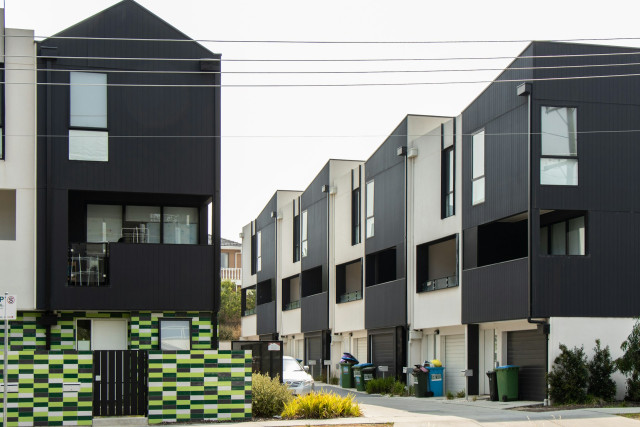
Alternative Housing Options: Exploring Non-Traditional Living Spaces
The idea of “home” has always meant a house with walls, a roof, and maybe a backyard or an apartment in a gated community. For decades, city planning and real estate focused on the standard living arrangements. In recent years, the concept of home and the idea of what it means to be housed has changed due to various societal issues, including the unaffordability of housing, the lack of housing in sustainable forms, the growing population, and changes in lifestyle. In various places on the planet, flexible, low impact, and community housing alternatives to mainstream housing are arriving fast and trying to solve the housing problem.
Alternative housing to the mainstream markets isn’t a silly idea anymore. Smart and practical alternatives are here. Tiny homes, co-housing, houseboats, modular construction, converted industrial spaces, and communal eco-villages have moved beyond concepts and are actually changing urban and rural spaces. These changes are most likely due to a shift in thinking about housing. People no longer see housing as a financial investment, but rather as a lifestyle choice that promotes the values of sustainability, affordability, and mobility.
One reason people are looking for housing alternatives is the affordability crisis around the world. In big cities, homeownership is almost impossible for people. There are economically unsustainable prices, and a lot of people are wondering how to solve these problems. On the other hand, Millennial and Gen Z are more willing to embrace flexible minimalist lifestyles, putting more value on moved around, and less on expensive housing.
Environmental challenges boost the popularity of alternative housing even more. Innovative new housing designs like off-grid homes, container housing, and shared community spaces led to decrease ecological footprints. Because of these innovations, homebuilders now incorporate more and more green and recycled materials and efficient use of space which contributes to global goals of sustainability and housing resilience.
This blog looks at six important alternative types of homes that are changing how we live now and how we will live in the future. Whether they are tiny homes created for minimalists, modern modular homes, mobile homes, or innovative co-housing communities, these alternatives all show that the concept of a “home” can vary and be more flexible than the people living in them.
Tiny Homes and the Minimalist Movement
Tiny homes are becoming popular all over the world. These homes range in size from 100 to 400 square feet. It focuses more on the design than the size, affordability, and environmental impact. These homes are not just for the minimalists, these homes are a good option for people that are minimalists to start with.
Almost everyone loves tiny homes for the financial freedom they give. With the rise in home prices, tiny homes are a good option as they can be built or bought for much cheaper than a traditional home. Lower mortgage or rental costs free individuals from decades of financial strain, enabling them to redirect income toward travel, education, or personal pursuits. The rental prices and student debt make them even more popular with the younger generations.
Living in a tiny home is also good for the environment. With smaller spaces come reduced energy consumption, less material use in construction, and fewer possessions overall. These homes are also good for off-grid living. In an era with climate change, these homes promote living with low-impact.
There are problems with tiny homes. They run into problems with zoning laws and building codes which in some areas require a minimum legal square footage to live in a structure. Also, getting water, sewage, and other infrastructure services and connections are hard to get. Some families and people who are used to having their things and comfort may feel restricted in the limited space. For people who feel a sense space freedom, the tiny home may feel liberating.
Even with the challenges, tiny homes are still a home. They still encourage functional living. They redefine the meaning of “enough” and help people change their view on modern consumerism and the idea of hoarding. It helps them focus on relationships and living sustainably. With the continuing housing and cruel economy crises settlements, tiny homes will probably change in supply from niche to the conventional market. They will help provide a sustainable and underpriced living.
Co-Housing and Shared Communities
Co-housing, or collaborative housing, is where people redefine housing as shelter and also a platform for community living. While people have individual homes and gardens in suburbia, they also have to ignore or avoid their neighbors, as is the case with the traditional hybrid model. Co-housing families choose to live near and with each other per the community's collaborative, collective, and participatory model.
In every co-housing community, there are individual private living units, be they housing, apartments, or simply rooms. As in a co-op model, explained differently, there are also collective communal kitchens, gardens, and integrated recreation and work-space areas. There is individual privacy and the possibility of collective resource utilization and social integration. For example, there is communal child care, people work reactive and integrated systems, and social-meal organization.
These systems and communal living and integrated social systems zones with co-housing communities have financially attractive as resource and system are on the communal or co-op level. Maintenance systems, child care, and utilities are communal and integration cost. For families with young children and older people, co-housing is a system to live with integrated social support. For older people and families with young children, co-housing is a system to live with integrated social support.
While looking at it through a sustainability lens, co-housing systems are efficient. By sharing resources and with infrastructure shared, the environmental impacts are reduced. The unified decision making also tends to favor more sustainable options such as the use of solar panels, composting systems, and localized food production. Moreover, the supportive nature of such community arrangements allows the members of the community to feel safer and more resilient as the community themselves can handle certain emergencies or help in a crisis.
Though, co-housing engagements are not easy. It is not only about working together as a community, but also building a relationship of trust, and boldly tackling any issues the community conflict over. Consensus decision making can also be long and tedious. Similar to the issues surrounding tiny homes, unconventional zoning rules and financing systems are true of co-housing as well.
In the isolation of urban living, co-housing systems are a more socially connected and positive living arrangement. In a world where social isolation is on the rise, co-housing is a positive option, as it allows a redefinition of the concept of 'home' in a more embraced and inclusive community.
Houseboats and Floating Homes
If you enjoy the freedom of water and living outside the norms, houseboats and floating homes can be great alternatives to typical homes. Houseboats were primarily used for leisure purposes, but they are increasingly becoming permanent homes in places where property prices are skyrocketing and land is becoming scarce.
Floating homes primarily serve to relieve the situation of densely populated urban areas. Magical floating home communities exist in places like Amsterdam and Seattle where people live in homes docked in the water. These homes are floating communities and can either be carved luxuriously or simply. However, the floating lifestyle is the best relief from the regular urban lifestyle.
Floating homes are also appreciated for the savings they bring in. They are much cheaper alternatives to land homes, though savings may be lost in the docking costs and home upkeep. Just like houseboats, floating homes also provide freedom. Stationed homes may seem boring, but houseboats can be moved to new locations, ensuring unlimited 'adventure' for their residents.
Floating homes are also much better for the environment and people are realizing it. With the negative impacts of climate change, rising sea levels, and flooding, floating homes can serve as homes to weather-proof areas. Able to 'float' and change water levels, floating homes can help in areas where permanent homes are used with poor climates. Like any place to live, houseboats and floating homes also come with issues. Every city may not be equipped with the needed extra infrastructure—docks, the systems of water and sewage, and the laws of mooring. These homes also take more maintenance than land homes and the extreme weather can be a problem.
But there is no doubt about the attraction of the water. For lots of people, floating homes stand for the ideas of freedom, creativity, and the spirit of not giving up. They show that homes can be built above water. Creative ways to use space can lead to the building of dynamic communities.

Modular and Prefabricated Homes
Modular and prefabricated housing is changing how we design, build, and live in houses. Instead of taking several months and a lot of effort on-site, houses in the factory modular housing can be put together in sections and assembled on-site. With the global housing shortage, the speedy integration of prefabricated techniques in the construction will lowering the cost, and waste, be cost efficient, and increasing profit margins, makes these techniques even more attractive.
Affordability is the most attractive. Factory construction prefabricated housing is simultaneously efficient and economical, lowering building costs in comparison to traditional construction. These houses can now be part of the middle and lower class working families. Also, building from a single prefab piece to a multi-storied apartment is easily in the range of these models.
Another strength is speed. For emergency housing, like disaster recovery or building in quickly urbanizing areas, this makes a huge difference. Importantly, governments and NGOs have started to rely on prefabricated housing to quickly and cost-effectively meet housing needs while providing good quality housing.
Modular construction is also more sustainable. Modular construction wastes less material and integrates eco-friendly technologies like energy efficient insulation, green solar power, and rainwater harvesting. Some businesses pair cost effectiveness and environmental friendliness by using recycled shipping containers for housing units.
Some cultures have stigma surrounding modular homes. In this case, they see them as inferior or as mere temporary solutions. Slower adoption is partly due to building codes that view and regulate construction as conventional. In addition, some areas face logistical challenges concerning large module transport.
Modular and prefabricated housing remains as one of the best solutions to global housing crises and the construction industry. It is the future of alternative housing because of it's affordability, efficiency and adaptability. The innovation is the fact that prefabricated homes are "alternative" now, when they will eventually become the norm.
Converted and Adaptive Reuse Spaces
Adaptations over time shape our urban environment including buildings. One of the most fascinating alternative housing approaches is the adaptive reuse of non-residential buildings. The renovation of warehouses, factories, schools, shipping containers, and even churches into lively and colorful homes is remarkable.
There is something practical and aesthetic about adaptive reuse. Instead of demolishing and losing an old building, it can be turned into housing. It also minimizes construction waste and improves the urban area. For example, old factories turned loft apartments, lack old exposed building materials and massive windows, and are one of the most sought after apartments.
There are even more creative ways adaptive reuse solves the problem of housing affordability. It is true that luxury conversions exist, however, adaptive reuse of old public schools and other under-used public buildings is a more cost-effective approach that helps urban blight by revitalizing the old abandoned structures that surround them.
Adaptive reuse helps the environment. There is little to no wasted building material and less demolition means less environmental destruction. Many converted building also use modern green building technologies which improves the environmental impact of the buildings even more.
Eco-Villages and Sustainable Communities
Community members work together to foster resilience, integrate renewable energy, practice organic farming, and use sustainable building methods. Most residents live in simple houses, which in some cases, are built by themselves with natural and recycled materials. Besides individual houses, the community promotes collective infrastructures like renewable energy grids, water recycling systems, and community orchards and gardens, which All these collective infrastructures decreases the ecological impact and promotes self-dependence.
Eco-villages tend to be run on the principles of cooperation and local exchange in an economic model. Citizens can share equipment, vehicles and resources and save money and become united. Eco-villages in certain instances establish small business ventures like organic farms, handicrafts or eco-tourism to support their communities.
These communities focus on cooperation, inclusion, and support, socially. The process of decision making is usually participatory where every member gets a say in the direction of the community. Such a shared governance creates empowerment and sense of belonging.
Challenges, however, remain. Eco-villages need a lot of dedication and congruence of values among the inhabitants. The development of such communities can be characterized by complicated negotiations with the local government about the use of land, the building code, and the management of resources. Also, this way of life cannot suit all people, since it requires compromise, teamwork and in many cases, some level of self-reliance that most city dwellers are not used to.
Nevertheless, eco-villages introduce a strong perspective on housing surpassing the consumerist, individualistic model of the contemporary cities. They also indicate that housing alternatives can be environmentally sustainable, socially cohesive and affordable. Eco-villages are not only an option in an age of ecological and social crises, but also a model of a more balanced means of living.
Conclusion
Alternative housing is no longer just a stopgap solution to those who cannot access the traditional markets - it is the solution of rethinking the meaning of home itself. The small size of small houses, the community spirit of co-housing, the freedom of houseboats, the inventiveness of modular houses, these designs all bring out the possibilities of creativity, strength and adaptability in remaking housing.
Central to these options are the answers to urgent challenges of the world: affordability, environmental sustainability, and social fragmentation. They show that houses can be adaptable, portable, shared and in strong connection with ecological principles. Though they may not be without challenges, including regulatory, cultural or logistical, the models dispel old assumptions and open up possibilities about what shelter is going to be.
Housing is likely to be pluralistic in the future with conventional houses existing with variety of alternatives. To some it will be the question of affordability, to others it will be the question of sustainability or mobility, community and belonging to others. It is by adopting such diverse models that one will be able to make sure that the definition of housing will be more than just about bricks and mortar, it will be about dignity, creativity and resilience as well.
Finally, alternative housing helps us recall the fact that home is not the only place that is defined based on the size, location, or sale price. It is characterized by the fact that it satisfies human needs, helps to build relationship and represents common values. In this respect, experimenting with non-conventional living places is not only about constructing alternative houses--but also alternative futures.
Also Read: Alternative Low Cost Construction Materials





-3dkuLgKhRD.jpg)
-49HupTvwDD.jpg)





LEAVE A REPLY