

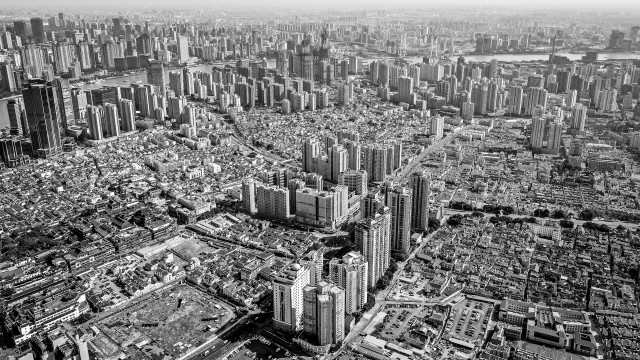
AI in Urban Planning: Predicting Future City Growth
The expanding cities create unanticipated obstacles which urban planners need to handle effectively during development.
Smart data-driven solutions become essential because cities face rapid growth alongside increasing traffic congestion alongside environmental issues and lack of housing resources.
Artificial Intelligence (AI) functions as the solution at this point.
The analysis of extensive data helps modern urban planning through trend prediction along with infrastructure optimization and enhanced decision systems.
Through AI-based systems urban planners obtain remarkable predictive accuracy during their assessments of future city expansion including traffic modeling and zoning rule creation and climate report generation and smart city blueprint development.
We will analyze the AI revolution in urban planning through its essential technologies, benefits, and challenges as well as actual implementation scenarios within this blog.
How AI is Revolutionizing Urban Planning
Artificial intelligence reshapes the practice of urban planning through predictive analytics which enables cities to design infrastructure and design transportation systems and residential developments from future population projections.
Real-time and historical data under AI-driven analysis provides forecasts about migration patterns along with economic growth and environmental components responsible for urban expansion.
The utilization of AI enables governments to distribute resources efficiently and avoids problems from occurring such as excessive crowding and substandard public infrastructure.
GIS benefits from AI algorithms for spatial data analysis to become a significant breakthrough in AI-driven urban planning systems.
Planners can use these systems to create visual representations of land usage and find suitable locations for new developments and track environmental threats like flooding alongside pollution risks.
AI technology performs essential functions for smart traffic management through pattern analysis of transportation patterns for route optimization and congestion reduction and enhanced public transit performance.
Through their AI-operated traffic management systems both Singapore and Amsterdam successfully enhance mobility while lowering carbon footprints during transit.
In addition to managing traffic flow AI enhances urban sustainability through its ability to minimize environmental footprint and conserve energy efficiently.
Advanced artificial intelligence tools produce ecological predictions about urban climate effects which become the basis for developing sustainable infrastructure solutions including solar power networks and eco-friendly rooftop installations and eco-smart waste systems.
AI integration with renewable energy solutions helps cities fulfill their future energy requirements in addition to reducing their greenhouse gas emissions.
The creation of digital twins represents a revolutionary AI application in urban planning since they provide real-time virtual copies of cities to examine different growth possibilities.
Through digital twin technology planners can evaluate infrastructure plans and emergency response strategies and optimize city service delivery systems before actual implementation in the physical environment.
Major cities like Shanghai and Singapore have adopted AI-powered digital twins which enhance their urban efficiency alongside strengthening their resilience.
Benefits of AI in Urban Planning
The implementation of AI in urban planning leads to various advantages which encompass better decisions and lower expenses together with environmental stability and reinforced public security.
AI system processing large data volumes enables city planners to obtain precise and fast data analysis that enables better planning decisions.
Better resource management combined with optimized public services and improved city management results from these processes.
The use of AI leads to saving costs by eliminating wasted infrastructure investments.
Using AI to conduct accurate predictions about urban growth and public service needs allows cities to prevent building excess infrastructure in low-demand areas while directing their resources to serve populations in high-demand areas.
AI-powered smart traffic systems combined with intelligent transportation planning technologies help municipal operations cut fuel usage while decreasing pollutant release thus saving operational expenses.
The adoption of artificial intelligence in urban planning enables sustainable development of cities.
The application of AI enables cities to accomplish multiple sustainable development goals through designing environmentally friendly built environments and effective waste systems and real-time pollution tracking.
Programmed Mental Intelligence models enable urban developers to reduce climate-based hazards while making cities expand sustainably through economic growth and sustainable environmental practices.
Cities experience enhanced public safety because AI systems drive their safety services along with disaster response activities.
AI analysis of crime patterns through predictive policing helps security forces identify better strategies which create safer cities for urban residents.
The AI-driven disaster response systems monitor hazards and generate advance notices for both hurricanes and floods as well as other types of natural disasters.
Implementing AI into emergency response allows municipalities to handle crises better and reduce disaster impacts.
Challenges and Ethical Concerns in AI-Driven Urban Planning
Copyright expert services ai faces several obstacles and moral problems which need proper management. The major issue of concern centers on protecting data privacy alongside securing information.
Monte Carlo localization and map-based techniques heavily depend on massive data repositories that usually contain personal and community-specific sensitive information.
The ethical usage of data collection for these systems maintains privacy protection from unauthorized surveillance activities.
Urban development becomes unequal because of algorithmic biases that exist in the system. The training of AI models through biased datasets will direct their functionality toward benefiting prosperous areas at the expense of poor neighborhoods.
Inequities appear regarding investments in infrastructure as well as provision of public services and development of housing districts.
It is essential to combat this problem by applying diverse databases with representative examples to achieve equitable urban development practices.
Job positions related to traditional urban planning might become unnecessary due to AI-driven automation leading to employee displacement.
AI technology removes positions from some jobs but simultaneously generates employment roles within data science alongside AI ethics practice and smart city management fields.
To face upcoming changes the workforce needs training programs which should develop AI-related competencies for professionals.
Resolution of developing nations faces obstacles when it comes to funding the implementation of AI-based urban planning solutions.
The implementation of AI infrastructure together with smart city technology and training programs for AI requires substantial financial investment needs.
Larger urban centers possess enough funding for adopting artificial intelligence-based planning initiatives but smaller municipalities face lack of financial access.
The implementation of AI requires governments along with international entities to devise financing frameworks and supporting governmental policies promoting AI adoption throughout urban areas of any scale.
Real-World Case Studies of AI in Urban Planning
Various metropolitan areas throughout the world effectively incorporate Artificial Intelligence during their urban development operations.
Singapore leads globally as a leading smart city through its AI-powered initiatives that apply AI techniques to urban planning and traffic systems and energy distribution management.
The city employs AI-based systems for urban planning which evaluate current datasets to make decisions that optimize efficiency along with sustainability goals.
The city government of Barcelona executed an effective implementation of AI for urban planning purposes.
The city utilizes AI through its smart infrastructure initiatives which optimize public transportation beef making waste management more efficient and reduce energy consumption.
Through AI-based environmental monitoring Barcelona has improved its air quality measurement capabilities along with lowering pollution levels.
The city of New York City utilizes AI systems for preparing against disasters and prevention of criminal activities.
The city decreases flood hazards through AI-based prediction systems which identify forthcoming extreme weather events and polices specific areas where crime is most active through AI-driven predictive analysis.
The implemented applications show how artificial intelligence technology enhances urban resilience and delivers better life quality to citizens.

The Future of AI in Urban Planning
AI urban planning looks forward to an exciting path of development. Thank to automation techniques driven by AI smart cities will develop while transportation systems will optimize and energy use will become more efficient.
The expansion of technology will produce AI-based autonomous public transit with AI-connected air quality screens and AI-operated waste handling frameworks.
The combination of blockchain technology with AI creates solutions for increasing transparency during urban governance activities.
The combination of AI technology with smart contracts enables automatic service management of public services while reducing administrative burdens and stopping corruption that affects land registry systems. When AI connects with blockchain technology cities generate more efficient governance structures that bring enhanced accountability.
The formation of future cities demands essential international collaboration between entities that use AI for planning purposes.
Nations along with organizations need to team up for creating worldwide AI rules and should spread effective methods while making sure AI helps deliver benefits to the world's urban residents.
The development of ethical AI models together with innovation funding will lead cities to success as highly efficient sustainable communities.
The Role of AI in Smart Infrastructure Development
AI functions as a key foundation to revolutionize infrastructure growth by developing cities that operate effectively and sustainably along with being resistant to damage.
Modern urban infrastructure planning bases its calculations on static models which fail to adjust to quick urbanization together with changing population patterns.
The combination of AI technologies enables instant data analysis together with predictive modeling thus infrastructure development can follow anticipated future requirements.
AI makes intelligent construction planning one of the vital uses in developing infrastructure. AI algorithms use historical along with real-time data to locate optimal sites for new infrastructure development.
Such models optimize decision-making processes through their analysis of population density and environmental impact as well as traffic flow and resource availability.
The design processes and material selection benefits from AI technology to produce cost-efficient structures that maintain energy efficiency standards through an environmentally friendly approach.
Predictive maintenance fueled by AI constitutes a revolutionary advancement in infrastructure supervision.
The combination of sensors and monitoring systems empowered by AI performs proactive predictions which allow maintenance crew to anticipate when to fix roads, bridges, water pipelines and electrical grids.
Real-time structural health analysis from AI helps organizations avoid breakdowns and ensures better public safety measures.
Artificial intelligence operating through drones performs examination of bridges and highways to detect structural damage that could develop into major problems.
Energy management systems operated by AI together with smart grids transform how cities handle their electricity distribution.
AI systems utilize algorithms to examine how communities use energy and collect weather data and market-related changes before they refine energy supply patterns.
The integration of AI operating systems produces minimum power consumption together with lower operational costs while delivering more dependable electricity service.
San Diego together with Amsterdam use AI-based smart grid technology to upgrade their energy efficiency standards and merge solar and wind energy systems.
People can detect water leaks within cities and optimize water distribution using AI-powered water management systems.
Through analyzing water pipeline sensor data AI systems determine operational deficiencies then forecast equipment failures to optimally manage water distribution.
People affected by water scarcity particularly benefit from AI-driven solutions because they minimize waste and create better conservation outcomes.
The use of AI for optimizing public transportation infrastructure leads to optimization benefits.
AI sensors within public transit networks analyze movement patterns and route efficiency and passenger demand and traffic flow data to develop better urban transportation systems.
AI technology enables urban planners to create optimized public transportation itineraries and operate schedule modifications instantly as well as unite transportation modes efficiently.
The optimized system leads to decreased system congestions alongside reduced environmental emissions and better quality service for commuters.
AI-driven infrastructure solutions that improve urban living have become a standard practice in smart cities across different parts of the world.
Singapore's smart city programs implement AI-powered building management technology which operates lighting as well as ventilation and energy consumption according to office occupancy statistics.
Barcelona employs AI-based garbage collection management that saves money and protect the environment by improving waste collection organization.
Through its intelligent systems AI drives a fundamental transformation that creates more flexible modern and efficient urban structures in infrastructure development.
To meet population needs and reduce operational spending and environmental consequences cities are developing increasing use of intelligent infrastructure through advancing AI technology.
AI-Driven Public Engagement in Urban Planning
The process of shaping cities depends heavily on public participation because communities need to maintain their voices in urban development.
Traditional public input collection methods through town hall meetings and surveys take too long to gather input while reaching limited numbers of participants while missing various community viewpoints.
Through its data-driven approach AI technology enables urban planning to become more inclusive and provides enhanced interactivity with citizens across the community.
AI-powered chat bots with virtual assistance systems represent an effective method through which the public's engagement improves.
The technological tools provide prompt access to development information for residents enabling real-time question submission together with feedback possibilities that keep people updated about planning initiatives.
The mass processing capacity of AI chat bots delivers accurate and prompt customer responses to large numbers of citizen inquiries.
Through these practices urban planning becomes more understandable for wider public groups to access.
DXC Document existence realizes sentiment analysis through AI together with social media monitoring to provide city planners real-time public opinion insights.
The analysis of social media content through AI reveals significant resident issues and trending matters together with assessment of their desired improvements.
Program planners can use this capability to resolve problems ahead of time while creating solutions specific to community requirements.
The analysis of citizen sentiment through AI-powered technology enabled London officials to monitor public reactions toward transportation policies thereby guiding strategy adjustments with immediate resident feedback.
Through AI-based participatory urban design platforms citizens obtain the chance to preview and engage with future urban developments before construction occurs.
Residents can experience proposed city changes through simulated environments which are powered by artificial intelligence (AI) on virtual reality (VR) and augmented reality (AR) applications.
The technology enables users to inspect proposed future constructions and landscapes and transit schemes while developers utilize the received comments to better their creations.
Indeed this deep community involvement makes sure that new urban development projects fulfill public expectations and community requirements.
The combination of AI surveys with data analytic tools optimizes the process of collecting community feedback. Traditional survey methods tend to achieve low response engagement while reaching a narrow range of the population. The use of AI-powered survey tools enhances population participation through automated machine learning algorithms that detect optimal methods for different population groups. The analysis of AI-driven responses provides better results because it detects hidden patterns and key priorities which manual examination cannot show. Planning decisions based on data become more accurate since the algorithms reveal genuine public sentiments.
Public engagement strategies benefit drastically from predictive modeling solutions for urban scenario analysis as a result of AI technology.
Artificial Intelligence creates models to forecast different urban planning alternatives based on public voter preferences and population statistical data.
AI provides residents with various options for new public park designs or transportation hub designs so they can select their preferred choices through community-wide participation.
AI-powered urban scenario simulations deployed in Boston and Helsinki enhance community participation during planning initiatives because of their predictive modeling applications.
Conclusion
AI transforms urban planning through its predictive functionalities which transform infrastructure operations and promote sustainable urban development benefits.
Artificial Intelligence provides city governments with innovative solutions that address rapid urbanization problems including traffic management alongside better public transportation and environmental protection alongside public safety enhancements.
The deployment of Artificial Intelligence faces obstacles because of privacy matters and biased algorithms together with execution expenses though proper AI usage can overcome these barriers and create socially balanced urban environments.
AI technology development will expand its contributions to urban transformation thus creating smarter and more efficient sustainable urban environments of the future.
The acceptance of AI-driven urban planning enables cities to transform into intelligent environmentally responsible communities that will thrive under future conditions.
Also read: African Urbanization: Opportunities in Lagos and Nairobi



-ySWGlp0vgc.jpg)



-3dkuLgKhRD.jpg)








LEAVE A REPLY