

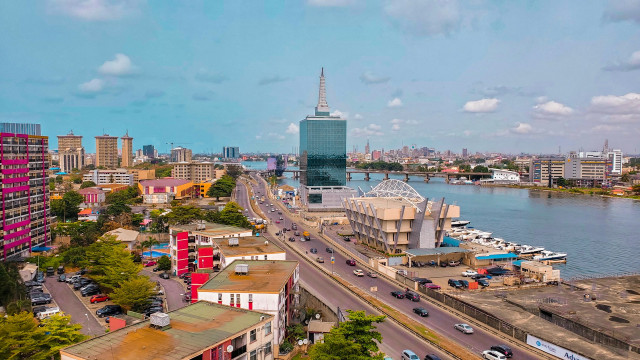
Case Study: Affordable Housing Initiatives in South Africa, Kenya, and Nigeria
Low cost housing is one of the most urgent development issues in the continent of Africa. A combination of the rapid urbanization, the increase in population, and economic inequality have all come to a point where the housing demand and supply are growing apart. Though over 40 percent of the Africa population are now living in cities, millions have no secure, safe, and affordability of shelter. There is therefore growing pressure on governments, private developers and international agencies to come up with sustainable solutions that will strike the right balance between social equity, economic viability and environmental responsibility.
This case study is dedicated to the three key countries South Africa, Kenya, and Nigeria each of which represents the various level of economic growth, development of policies and maturity of housing market. This practice in South Africa is based on the decades of state-centered investment and post-apartheid reforms; the model of Kenya is based on the principles of collaboration with the government and the innovative application of technologies; and the case of Nigeria, the most populous state in Africa, which has to deal with the two challenges of the rapid urbanization and the highly informal housing market.
This analysis offers clues to understanding the way African countries are struggling with the housing affordability challenge and testing new inclusive urban development models with new approaches by looking at these three contexts. It will discuss the policy, financial instruments, and innovations in construction that determine housing delivery in these nations. The successes, current challenges, and lessons that may inform the future initiatives are also discussed in the discussion.
Finally, it is aimed to demonstrate that although the housing crisis is huge in Africa, it is not unbeatable. Affordable housing can be a social right and scalable financing mechanism, through strategic policy alignment, community participation, and scalable financing solutions, to become an economic sector of sustainable economic development.
South Africa: A Social Housing Policy Model

The affordable housing system in South Africa is among the oldest in Africa as a result of the decades of social policy and government intervention since the apartheid was abolished in 1994. The Reconstruction and Development Programme (RDP) was a historic move on the side of the state to deal with the inequality of housing. South Africa is the biggest provider of state-funded houses in the continent as over four million of the subsidized houses were delivered within the past three decades.
The South Africa housing strategy is anchored on the rights based constitutional basis. Housing was found to be one of the basic human rights and thus the government is an obligatory institution to establish the environment in which all people are able to access a good shelter. This political will has created mass public investment in the form of a policy like the Breaking New Ground (BNG) policy that took over RDP in 2004 to encourage integrated human settlements and mixed-income.
Nevertheless, in spite of remarkable quantitative improvements, the system has qualitative and structural issues. New structures of spatial inequalities of the apartheid period were replicated with many RDP houses being constructed in outskirts of cities, distant to employment centers, educational institutions and services. Also, funding issues, inefficiencies in bureaucracy and increase in construction costs have slowed down delivery in recent years. It is estimated that South Africa is still behind in terms of housing units of more than two millions.
One of the most significant changes in recent years has been the growth of social and rental housing by such institutions as the Social Housing Regulatory Authority (SHRA). In partnership with non-profit housing associations, SHRA funds projects that fit the households with incomes ranging between R1500 and R7500 per month, which are too high to be fully subsidized but are too low to buy with commercial lending. This is a gap market strategy that would increase affordability and inclusiveness.
The role of the private sector is also on the increase. Capital is passed on to affordable housing developments via blended finance and public-private partnerships by financial intermediaries like the National Housing Finance Corporation (NHFC) and Housing Investment Partners (HIP). In the meantime, the cost-containment through innovation in building materials (including alternative bricks and modular construction) contributes to environmental sustainability.
Overall, as it was demonstrated in the case of South Africa, political commitment, institutional capacity, and long-term investment may produce significant progress. However, it also highlights the significance of spatial justice, efficiency of governance and continuous innovation to make urban space affordable and integrated in the context of the dynamic urban environment.
Kenya: Partnerships, Policy Reform, and Innovation.

Kenya is one of the most vibrant and reform-driven affordable housing setup in Africa. The government has made housing a national development priority due to the rapid urbanisation spawned by population influx in the country especially Nairobi which has registered a growth rate of almost 150,000 people per year. According to Kenya Vision 2030, the affordable housing is one of the pillars of the Big Four Agenda of the country along with manufacturing, healthcare, and food security.
It is estimated that the government of Kenya has a demand of approximately 250,000 units annually in terms of housing provision and yet the formal sector produces less than 50,000 units. This continuing deficit has prompted an enormous array of public-private partnerships and financial innovations to fill the gap. At the center of these activities is Kenya Affordable Housing Program (AHP) initiated in 2017, aimed at providing 500,000 affordable units by merging between a group of private developers, financial institutions, and international partners.
Another feature of the Kenyan strategy is a focus on financial innovation. In 2018, the formation of Kenya Mortgage Refinance Company (KMRC) stood out as a significant step towards enhancing liquidity in the housing finance business. KMRC has the power to lend money to banks and SACCOs (savings and credit cooperatives) over a long period so that the lenders can provide more affordable mortgage rates. This will serve to reduce the home ownership expenses of middle-income and low-income citizens, as well as those who were not able to access formal credit.
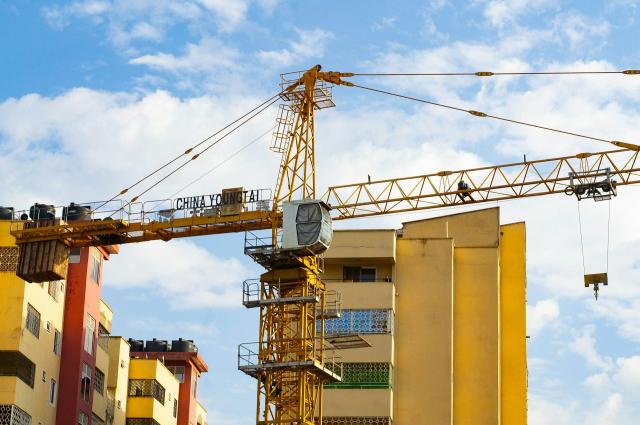
Kenya has adopted technology and modular construction on the construction side to minimize the costs and construction time. Prefabricated panels, the use of cheap concrete options, and the use of computerized design technology is becoming more popular among developers of the private and state sectors. The government has also engaged the international bodies, such as the World Bank and UN-Habitat, to better the regulatory systems, increase land supply, and advance infrastructure in new residential areas.
The active presence of the private sector and the development of the ecosystem of social enterprises is one of the peculiarities of Kenya. Non-profits and community based organizations, including Habitat for Humanity Kenya and Shelter Afrique are essential in the pilot of sustainable housing projects, and financing models that are aimed at informal workers.
However, the issues are still serious. The process of land acquisition is also not fast and is controversial because of overlapping of claims and corruption. The construction prices have not yet come down, and the basic units are still unaffordable to a great number of low-income families. Informality in urban areas is still prevailing in the housing industry, with over 60 percent of the residential population in Nairobi residing in the informal settlements.
These obstacles notwithstanding, the combination of innovation, partnership and reform of policies in Kenya exemplifies a proactive model that maintains a balance between government coordination and the enterprising. Its reforms still going on are rich in lessons to other African countries in the quest to modernize their housing sectors.
Nigeria: The Scale of the Challenge

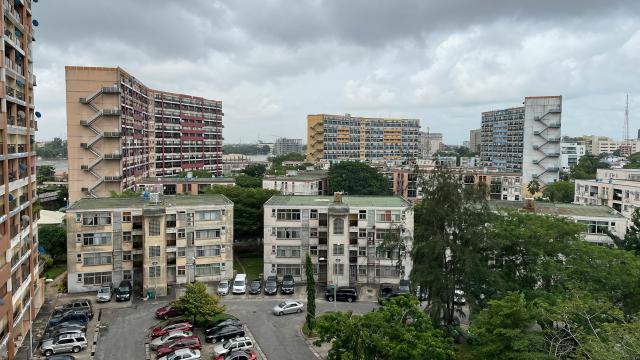
The affordable housing crisis in Nigeria is possibly the worst crisis among the continent, as it manifests the sheer level of the urban development and the uneven distribution of socio-economic factors. Nigeria is highly populated with more than 220 million population and urbanization rate of more than 4% per year hence enormous pressures on the cities in Nigeria which include Lagos, Abuja, Port Harcourt, and Kano, to serve the growing population. It has been estimated that there is a housing deficit of more than 20 million units in the country and this would cost billions of dollars to bridge the gap.
Traditionally, the policies of the housing sector in Nigeria have been disjointed and inadequately funded. The 1991 National Housing Policy had a comprehensive plan on mass housing but it did not have the proper implementation mechanisms. Later programs such as the National Housing fund (NHF) and other state-funded programs have not helped much as the governance is not consistent, income penetration in mortgage is low, and cost of construction is very high.
The mortgage market of Nigeria is small and it is offered to less than 1 percent of the population. Most Nigerians cannot afford home loans which have high interest rates at times exceeding 15 percent and short repayment quarters. In response to this the government set up the Nigeria Mortgage refinance company (NMRC) in the year 2013, which is largely based on the KMRC in Kenya. The NMRC will expand the secondary mortgage market, liquidity and standardization of mortgage practices.
In the meantime, there are new solutions being created. There are public-private partnerships like Family Homes Fund (FHF) initiated in 2016 that aim at the delivery of affordable housing to the low-income earners. The FHF works in partnership with the state governments and developers in building affordable housing developments; employment creation and sourcing of local materials form part of its model.
There are also incremental and cooperative housing schemes by the private developers that suit the large informal economy of Nigeria. Projects such as the Grand Luvu Estate, of Millard Fuller Foundation located in the state of Nasarawa show that it is possible to build quality houses at less than 15k in the most cost-effective and environmentally friendly ways.
However, the problems that face Nigeria are systemic. The Land Use Act of 1978 is very cumbersome because land ownership is centralized to the governors of the states, and this provides a bottleneck effect. Lack of infrastructure such as inefficient roads, electricity, and water increases the costs of buildings. Besides, the corrupt nature and improper urban planning has resulted in unsustainable sprawl and environmental degradation.
To overcome these challenges, the solutions lie in a thorough overhaul of policies, better governance and specific financial products to access the low-income population. The housing industry in Nigeria has enormous potential to boost economic growth, given that Nigeria has a huge population and the young labor force that can be tied to the industry.
Comparative Insights: An Integration of Areas, Inequalities.
A comparative analysis of South Africa, Kenya and Nigeria has revealed that there are similarities in aspirations and differences in methods. Housing has been a social and economic priority in all the three countries, though institutional structures, policy structures and funding ecosystems differ widely.
The model in South Africa focuses on state-led welfare and institutionalized structures whereas Kenya has been led by market-driven innovation and partnerships and Nigeria continues to grapple with structural bottlenecks that do not support large scale delivery. Nonetheless, a number of similar themes can be identified:
- Public-Private Synergy: The collaboration between the government, developers, and financiers are increasingly being embraced by individual countries. The ability to bridge the funding gaps is through blended finance models, which comprise grants, equity and loans.
- Financial Inclusion: Availability of affordable mortgages and microfinance products is important. Such institutions as KMRC and NMRC are developing innovative methods, but there is a low penetration.
- Complex land tenure Systems: This is a universal impediment, land and regulation. The land registration process, the cadasters digitization, and the urban planning laws should be streamlined to advance.
- Technology and Sustainability: Prefabricated building, green materials, and digital technologies are starting to save money and ensure efficiency.
These comparative lessons bring out the fact that no one model fits all, but hybrid approaches such as combining the use of public leadership, private innovations, and community participation have the best chances of success.
Affordable Housing: Social and Economic Consequences.
In these countries, affordable housing programs do not simply offer shelter, but they also spur far-reaching socio-economic change. Housing development brings in construction, manufacturing and services employment. As an example, the housing programs in South Africa have provided hundreds of thousands of jobs in the construction and other related industries.
In addition, the house ownership promotes the development of asset and wealth especially to the low income families. Secure tenure enables residents to invest in their neighborhoods, access credit as well as attain social stability. Affordable housing also leads to the health and education outcomes through the better living conditions, less congestion and safety.
On a macroeconomic front, housing is a multiplier as it stimulates the GDP growth due to its connection with finance, manufacturing and infrastructure. To the governments, a cheap housing is not just an expense in terms of social cost, but it is more of an economic strategy investment.
Its advantages are, however, based on inclusivity and sustainability. The projects that do not combine with the transportation, education, and employment zones would continue to promote inequality. Affordability in the long run should be based on ongoing financial, material, and land policy innovation, so that the homes can be affordable to succeeding generations.
Lessons and the Way Forward
The case of South Africa, Kenya, and Nigeria indicates that the housing deficit in Africa needs multi-dimensional and country-specific solutions based on collective principles. Governments have to walk the fine line between scale, quality and affordability using coordinated policy, innovation and partnership.
Key priorities include:
- Enhancing land administration and housing finance governance and transparency.
- Enhancing local production of construction materials in order to decrease the dependency on imports and cost.
- Enhancing ecosystems of housing finance by increasing long-term low-interest mortgage-backed securities and micro-finance.
- Advocacy of inclusive planning that incorporates affordable housing in the larger urban development structures.
The issue of housing will always persist as African cities expand, and as the urban resilience, social equity, and economic changes will stay central to the growth of African cities.
Conclusion
Affordable housing is not merely a matter of construction of houses but it is also a matter of creating futures. The South African, Kenyan and Nigerian case studies indicate that the issue is multifaceted, but it can be improved with the help of a strategic vision, institutional reform and cross-sector cooperation.
The experiences of each of the countries teach a lot: the stability of the policy in South Africa, the focus on innovation and alliances in Kenya, and the focus on reform and inclusion in Nigeria. They both show that affordable housing can restructure the urban path of Africa when viewed as a social necessity as well as an economic stimulus.
It will require long-term political determination, community involvement, and the investment in local capacity in order to make sure that no African remains without access to decent, affordable, and sustainable shelter, which will become a platform on which inclusive development and human dignity will thrive.
Also Read: Affordable housing in Kenya Market shaping indicators











LEAVE A REPLY