

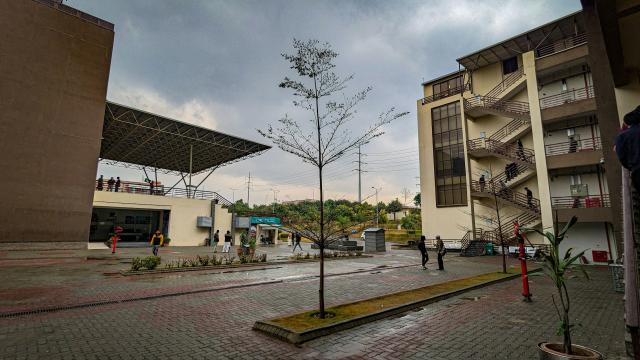
Affordable Housing Projects in Lahore, Karachi & Islamabad
The demand for inexpensive housing continues to grow in Pakistani urban areas while the population expands and more people relocate to cities. Major cities of Pakistan including Lahore Karachi and Islamabad now benefit from government and private sector initiatives to provide accessible housing at affordable prices. Multiple residential developments offer quality accommodations available for purchase by families with low to middle incomes despite reasonable pricing structures suitable for Islamic and conventional mortgage schemes.
The following section details crucial affordable housing projects across these three cities.
Affordable Housing in Lahore
From diverse areas of Punjab numerous individuals relocate to Lahore as the city continues to grow rapidly because of its large population base. The requirement for budget-friendly housing options in Lahore exists at its highest level yet. The following analysis details Lahore’s principal affordable housing project developments:
a. LDA City
- As the Lahore Development Authority leads its development LDA City stands as the largest public housing project in Pakistan's territory. This housing development occupies 58000 kanals which intends to house above 50000 families.
- Low prices for 5 10 marla and 1 kanal plots dominate LDA City since its property rates stand much lower than those of private developers. Potential buyers can obtain these lots through ballot system and installment payment options.
- The society development follows a detailed master plan which includes educational institutions and parks together with roads and commercial zones and utility services.
- The target group consists of government employees, salaried workers and new homebuyers who can take advantage of Islamic home finance solutions provided by Meezan Bank along with Bank Islami.
b. Kings Town by Al-Kabir Developers
- Kings Town by Al-Kabir Developers has located itself on Raiwind Road where developing neighborhoods are active.
- Kings Town provides small living spaces consisting of 3 and 5 marla lots and houses represented by competitive market prices.
- Payment Flexibility: Installment plans of up to 3–4 years, with monthly payments as low as PKR 15,000–20,000.
- The concept offers middle-class clients the chance to purchase homes through minimal down payments too.
c. Maryam Town
- The developer responsible for Maryam Town construction is Al-Kabir Developers.
- The project supplies both ready-built 3 and 5 marla house units together with residential property plots to potential buyers. The project exists to create affordable housing that stands up to basic construction standards.
- The Islamic banking system with Shariah-compliant financing such as Diminishing Musharakah enables families unwilling to take interest to make investments.
Affordable Housing in Karachi
The population of Karachi continues to increase while urbanization leads to scarcity of affordable housing places primarily within the economical segment. Unregulated settlement areas in the city exist because people cannot afford regulated residential housing. The following projects create changes in the current situation.
a. Taiser Town Scheme-45
- The Malir Development Authority operates as developer managing this major older and largest low-income housing project in Karachi.
- The project occupies large land areas spanning thousands of acres with only three plot dimension options which are 80 square yards, 120 square yards and 240 square yards.
- The subsidized plot prices allow buyers to pay over multiple years through installments that range from 3 to 5 years.
- The infrastructure development has progressed despite slow initial progress.
- People who earn low income as well as those living in crowded urban neighborhoods make up the target group.
b. ASF City Karachi
- Developer: Airport Security Forces Foundation.
- The area between DHA City Karachi and M-9 Motorway positions the land as a strategic development hub that will boom in the approaching decade.
- The real estate development offers plots of 125 sq. yd. size available through installment payments that span up to 3–5 years.
- The smart city development includes the design of electricity systems and water management together with green ecological areas.
- Young working individuals together with middle-class households who want to invest for their future or plan to reside there in the future will benefit from this opportunity.
c. Gulshan-e-Benazir Township
- The government created this settlement through a resettlement program for Lyari Expressway project evacuees.
- The residential area spans across different locations throughout the city putting Hawksbay and Northern Bypass sections among them.
- The affordability of this project features fully subsidized or low-priced land plots together with homes available for eligible beneficiaries mainly through qualification criteria.
- Utilities and educational facilities are accessible at this resettlement site.
- This development has established a model for additional affordable housing projects even though it does not currently operate for commercial sales.
Affordable Housing in Islamabad
The city of Islamabad primarily targeted high-end residential lifestyles until it started developing budget-priced housing developments to meet rising needs from public servants alongside fresh talent.
a. Gulberg Residencia (Economy Blocks)
- The developer responsible for this project is Intelligence Bureau Employees Cooperative Housing Scheme (IBECHS).
- The residential complex stands near Islamabad Expressway which provides quick routes throughout the city.
- Plot Sizes: Offers smaller plots (5, 7 marla) and apartment units at comparatively lower prices.
- Facilities: High-quality road network, underground electricity, water supply, schools, and mosques.
- The scheme serves lower and middle-income groups through housing developments equipped with basic infrastructure.
b. Park View City (Low-Cost Blocks)
- Developer: Vision Group.
- Location: Situated near Bhara Kahu, around 15 minutes from Serena Hotel.
- The housing development included 3.5 marla residential areas to make properties accessible for budget-conscious homebuyers.
- The installment payment system enables purchasers to spread the payments across 2 to 3 years through a convenient system.
- First-time homebuyers find Park View City attractive because the developer is reputable and the property values grow steadily in a secure neighborhood.
c. Mumtaz City
- Developer: Mumtaz Construction Company.
- Location: Near the New Islamabad International Airport and M-1/M-2 motorways.
- This locality provides 5, 7 marla plot areas and budget-friendly residential apartments to meet the needs of salary earners.
- The community provides round-the-clock security monitoring and offers access to water services and electricity supply and gas distribution facilities as well as educational establishments and professional business areas.
- The development benefits from its proximity to the airport and metro system which enhances its market value potential.
Government & Islamic Financing Support for Affordable Housing
These projects become cost-effective because they benefit from government subsidy programs and Shariah-compliant financing options which include:
a. Naya Pakistan Housing Program (NPHP)
- Goal: Construction of 5 million homes for low and middle-income Pakistanis.
- Loan Tiers:
- The financial support program of NAPHDA extends PKR 3 million in loans with 3% interest rate markup.
- Tier 2 & 3: For general public; higher limits with 5%–7% markup.
- Islamic banking institutions along with conventional banks show financing support within these operations.
b. Islamic Home Loans
- Shariah-Compliant Models:
- Diminishing Musharakah: Most commonly used. During this scheme the property ownership splits between the bank and the buyer who gets ownership of the property after periodic payments.
- Ijara: Similar to leasing.
- Through the Halal financing method of Murabaha the bank purchases properties which the buyer acquires on installments with added profit.
c. State Bank & PHATA Support
- The State Bank of Pakistan promotes an official minimum requirement of financing for low-cost housing among financial institutions.
- Developers cooperate with Punjab Housing and Town Planning Agency (PHATA) to provide projects at affordable prices.
Role of Private Developers in Promoting Affordable Housing
Private developers have substantially increased their involvement in the affordable housing sector throughout the past few years. Privileged developers used to target exclusively luxury segments until they recognized the vast market possibilities of serving working-class consumers particularly in major urban centers including Lahore and Karachi and Islamabad.
a. Strategic Development within Premium Projects
Several developers build cheap housing blocks alongside their main residential schemes. For example:
- Bahria Greens represents an affordable residential development from Bahria Town Karachi that features modest residential positions and property structures.
- Islamabad residents can acquire 3.5 marla plots through easy payment schedules at Park View City.
- The developers of Al-Kabir Developers offer 3 & 5 marla housing options in their Lahore-based projects including Kings Town and Maryam Town.
The combined method provides residential buyers high-quality infrastructure security alongside cost-effective purchasing options.
b. Flexible Payment Plans
The installment system that starts from PKR 15,000 to PKR 25,000 monthly creates new possibilities for home acquisition for potential buyers. Developers offer:
- Booking procedures require small initial payments which normally range from PKR 200,000 up to PKR 500,000.
- House buying installments extend from two to five years.
- Discounts on early payments or lump sum purchases.
c. Partnerships with Islamic Banks
A growing number of private developers works together with Islamic financial organizations Meezan Bank and Bank Islami. These partnerships offer:
- Pre-approved financing options.
- Shariah-compliant plans (Diminishing Musharakah).
- Salaried people along with first-time homebuyers experience simplified mortgage application procedures.

Challenges to Affordable Housing Development in Major Cities
The number of affordable housing projects has increased yet various structural and regulatory challenges prevent their universal success.
a. Urban Land Constraints
The dense population of Karachi and Lahore central areas forces builders to establish affordable housing developments outside the city center. Due to its more affordable price tag several critical problems develop.
- Accessibility to jobs and schools.
- Transportation costs.
- Lack of basic civic amenities in underdeveloped zones.
b. Delayed Infrastructure
Various housing projects including properties with ready possession plots face difficulties which include:
- Residents often face prolonged delays when they try to connect their houses with water supply and gas services and electrical power.
- The area lacks road infrastructure along with defective sewage pipelines.
- The slow implementation of master plans occurs because city authorities’ show limited coordination with one another.
c. Legal & Regulatory Risks
Buyers face significant risk from:
- The absence of required approvals from National Oversight Committee (NOC) makes property projects legally unstable.
- Court-mandated halts in construction.
- Building professionals who do not complete scheduled delivery of contracted amenities.
d. Lack of Financing Awareness
Many citizens do not understand:
- Naya Pakistan Housing Subsidy programs.
- Shariah-compliant housing finance options.
- Potential borrowers need to understand the loan application method for both Islamic banks and traditional commercial financial institutions.
Through appropriate guidance and awareness campaigns one can tap into currently underserved markets.
Future of Affordable Housing in Pakistan: Trends and Opportunities
The changing pace of urbanization and technological development will result in major changes within Pakistan's affordable housing sector. Several influential movements are reshaping the upcoming housing market as follows:
a. Population Boom & Urban Migration
With over 220 million people and a growing urban population:
- The Pakistani cities Lahore and Karachi will experience rapid growth in demand for affordable residential properties.
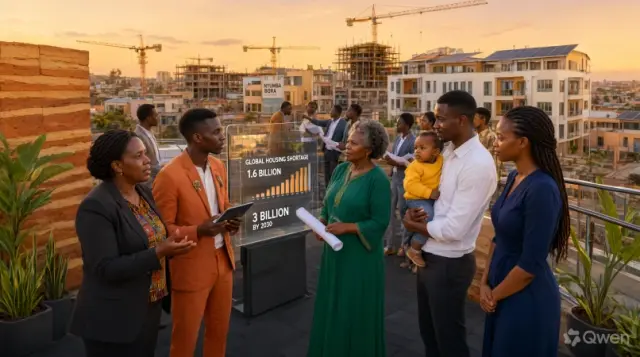
- The expectation by experts shows that Pakistan needs more than 10 million houses to close the national housing gap which will develop until 2030.
- The real estate market will be steered by developers who concentrate on developing apartment buildings and small housing units along with compact residential property layouts.
b. Smart & Green Housing Projects
Emerging smart cities like:
- Blue World City (Islamabad)
- Ravi Riverfront Lahore has designed a project that unites affordable housing development with various digital features including automated services and green energy applications as well as intelligent traffic systems.
- Automated utilities
- Green energy
- Intelligent traffic systems
The introduced urban features will improve quality of life without increasing construction expenses.
c. Public-Private Collaborations
Affordable housing projects of the future will succeed due to the combination of government support with private developer capabilities and Islamic bank financial resources.
- Government support includes land provision in combination with policy advantages.
- Private developers (managing execution)
- Islamic banks (offering interest-free or reduced markup loans)
Public-private partnerships (PPPs) can ensure:
- Speedy construction
- Affordability
- The systems will offer both transparency and trust-related services to their end users.
d. Digital and Islamic FinTech Integration
Virtual Islamic mortgage solutions are transforming how people access housing finance. These platforms will offer:
- Online eligibility checks
- Instant pre-approvals
- Zakat-compliant and riba-free financing options
This strategy will be particularly beneficial for tech-focused young customers who want ethical digital financial solutions first and foremost.
Government Policies and Incentives for Affordable Housing in Pakistan
Since the past decade the Pakistani government initiated various actions to promote home ownership particularly for people with middle and lower socioeconomic backgrounds. National initiatives combined with regulatory backing and financing strategies give the government a chance to decrease Pakistan's estimated housing shortage exceeding 10 million units.
a. The Naya Pakistan Housing Program (NPHP)
When it began operations in 2019 NPHP served as the fundamental initiative of Pakistan's affordable housing plan. NAPHDA launched the Naya Pakistan Housing Program to build housing units destined for lower-income citizens nationwide throughout the whole country.
Key features:
Subsidized mortgage financing through both Islamic and conventional banks.
- A financing model uses variable preferential markup rates in its structure.
- Tier 1: For NAPHDA-approved projects (markup as low as 3%).
- Tier 2: General housing (5% markup).
- Tier 3: Higher loan amounts for middle-income groups (7% markup).
The program allows flexibilities for income qualification standards because it does not need proof of official income documentation.
Impact:
- The towns of Lahore together with Islamabad and Quetta and Faisalabad have each witnessed the development of thousands of residential units.
- The financial institutions formed Memorandums of Understanding with several banks to simplify loan approval procedures.
- On multiple projects the development focused first on women together with widows and individuals with disabilities.
b. State Bank of Pakistan’s Low-Cost Housing Policy
The State Bank of Pakistan implemented several regulatory incentives that motivated banks to increase housing loan disbursements.
- The banking institutions must meet minimum requirements that direct them to allocate 5% of their private sector credit to housing development.
- The risk-sharing facility enables the government to assume credit risk responsibilities when people obtain low-income housing loans.
- Reduced capital requirements for banks offering mortgages in the affordable segment.
By implementing these incentives Islamic as well as conventional banks increased their housing sector participation.
c. Public Land Utilization for Housing
In response, the government directed:
- Government bodies at both federal and provincial levels must search for empty land suitable for housing development.
- Urban areas receive vertical housing development to increase land usage effectiveness.
For example:
- The National House Building Program adopted railway and defense authority properties in Lahore and Rawalpindi to construct multi-story apartments.
- The Government of Sindh started these initiatives through its agencies Malir Development Authority and Sindh Katchi Abadis Authority within Karachi.
d. Tax Incentives for Builders and Developers
The government introduced multiple offers to encourage private construction sector involvement.
- Fixed tax regimes for developers of affordable housing schemes.
- Indian developers received complete tax exemptions for purchasing both cement and steel materials.
- The construction amnesty scheme waived all inquiries about investment sources for 2020-21.
The provided incentives created an immediate positive impact on builder operations especially within major cities of Lahore, Islamabad, and Faisalabad.
e. Digitization & One-Window Systems
Public sector housing reform included government plans to fight corruption by implementing the following measures:
- Home borrowers can use online portals for the Naya Pakistan Housing loan application.
- Facility centers with a single window system enable rapid approval of necessary paperwork including NOCs and documents and maps.
The implementation of these systems improved operational efficiency because it eliminated procedural delays while making all data more transparent for public and private projects.
f. Challenges in Implementation
The quality of implementation fell short of the established policy goals because of various execution challenges between policy goals and outcome logistics.
- Delays in land acquisition and development, especially in urban centers.
- Working population in low-income families does not understand how to take advantage of these government benefits.
- Resistance from banks due to perceived high credit risk of lower-income borrowers.
Both programs of the ruling government equipped future administrations with tools needed to build upon further affordable housing initiatives.
Affordable housing has become reachable for potential buyers
Many Pakistanis considered home ownership in Lahore and together with Karachi and Islamabad as an unreachable goal for countless years. The changing housing market in Pakistan can be credited to modern housing developments combined with Islamic banking options and government monetary support. A modern-day buyer now finds property ownership more feasible through current available options.
The market now provides suitable residence solutions to new homebuyers and couples while remaining attainable for middle-income house seekers who need modest housing.
Also Read: 10 Year's Affordable Housing Delivery and Financial Strategy
-pKndpBz2AD.jpg)




-SJVWOkXfZJ.jpg)









LEAVE A REPLY