


Affordable Housing Markets: A Global Perspective
Affordable housing as a problem is one that has gained global prominence as an issue of high priority. Millions of households around the megacities in Asia and Africa, as well as in the suburbs of North America and Europe, have a hard time, accessing safe, secure and affordable houses.
The increased urbanization, income disparity, population and economic changes have heightened the strain on housing markets in all parts of the world. All governments, private developers, nonprofit organizations, and communities are trying to develop solutions, but there is no one-size-fits-all solution. The understanding of housing affordability is culturally, economically and politically specific, and this implies that the strategies employed are diverse. Nevertheless, these markets are connected by similarities: policy, finance, innovation, and social equity.
This blog will touch upon the global affordable housing situation, which will investigate various areas and their strategies to balance the supply and demand and affordability. Since Europe has focused on social housing and Asia on the fast-paced urban planning models and African has been found to develop affordable housing with low costs, the affordable housing story has displayed not only challenges but also an opportunity to construct equal, resilient societies.
Affordable Housing in North America: Policies, Pressures, and Market Dynamics
One of the most severe crises of housing affordability is experienced in North America and specifically in the United States and Canada. Property values and rents in cities like New York, Los Angeles, Toronto and Vancouver have been rising very fast, faster than rising wages. Households at the middle and low-income level experience rent-burden, where they spend above 30 percent of their earnings on housing.
The policies of affordable housing in the U.S. depend on such mechanisms as Low-Income Housing Tax Credit (LIHTC), Housing Choice Vouchers, and federal block grants. These programs are an encouragement to developers to construct and preserve cheap housing but they fail to reach demand. The scarcity is made worse by restrictive zoning regulations, gentrification, and lack of government investments in housing. In the meantime, the number of homeless individuals increases in most cities, which explains the necessity of more drastic policy responses.
One of the Canadian national strategies which are responding to this is the National Housing Strategy which is focused on reducing homelessness by half and developing hundreds of thousands of affordable units. However, critics claim that the process of execution takes time and the affordability base tends to shut out the most at risk groups.
The increasing popularity of modular and prefabricated housing is one of the trends in North America that can reduce construction costs and accelerate the delivery. Also, community land trusts are becoming a grassroots approach to keep housing affordable in the long term by decoupling land ownership and housing ownership.
Nevertheless, the affordable housing situation in North America has been such a deep-rooted issue in the larger question of inequality, racial inequalities, and urban planning. The solutions should be able to strike the right balance between short-term relief and structural reforms to be able to tackle the root causes of the affordability crisis.
Europe’s Social Housing Model: Lessons in Equity and Inclusion
Europe has traditionally had a highly established series of social housing programs as seen in places such as Austria, the Netherlands and France. Within the welfare-state policies of numerous European countries, housing is a social right, unlike North America where the housing market is heavily dependent on the incentives of the private sector.
A global example is usually given of Vienna, Austria. Over sixty percent of its residents are in subsidized housing, and affordable to a large income spectrum, not only to the poorest. The city also has high-quality and affordable units that are more than mere units but are made to fit perfectly within the urban settings to diminish stigmatization and encourage inclusiveness. This Universalist strategy makes it non-segregated and affordable between generations.
Conversely, the United Kingdom has experienced greater difficulties since decades of decreased investment in state housing and the disputable Right to buy policy which sold off most council housing. Today the UK is faced with shortages and skyrocketing rents especially in London. The attempts to revive social housing and encourage the development of affordable housing are still in progress and are quite controversial in politics.
The other European nations focus on co-operative housing, tenancy controls and strong tenant rights. Other examples include Germany, which has solid tenant protections that stabilize rents, but affordability is still tense in fast-growing cities such as Berlin. Integrating affordable housing into the wider welfare systems, Europe proves that affordability is not only a matter of economics, but also a pillar of equity and dignity.
Asia’s Urbanization Challenge: Building for Billions
Some of the most rapidly expanding urban populations in the world are in Asia, which generates a colossal demand in affordable housing. Mumbai, Shanghai, Jakarta and Manila are some of the cities which are experiencing unprecedented pressures due to the rapid rural-to-urban migration. Housing affordability has emerged as one of the most significant challenges of the region due to the scarcity of space, skyrocketing prices of land and income expansion that is not evenly spread.
China has reacted to this by spending a lot of money in building of mass housing. During the last several decades, the government created millions of inexpensive and subsidized units, which are usually incorporated into the massive urban planning projects. Critics however note that certain projects are not fully used because of poor location decisions, poor infrastructure or inappropriate standards of affordability.
The shortage of affordable housing in India is mind-blowing, as tens of millions of units are required to address the demand. The governmental initiatives such as Pradhan Mantri Awas Yojana (PMAY) are directed at providing Housing to all citizens but the progress is not uniform, problems involved in financing the projects, land acquisition, lesser participation of the private sector in the lower end markets are some of the challenges. The informal housing like slums remains a predominant type of housing to millions.
Similar challenges are encountered by Southeast Asia. Governments in Indonesia and the Philippines are testing initiatives to use public-private ventures to increase the supply of affordable housing. In the meantime, community-based housing co-operatives and microfinance projects can offer creative grassroots answers to marginal populations.
The conflict between equitable development and rapid growth is highlighted in the experience of Asia. In order to be successful, policies should not only generate high quantities of housing units but also access to infrastructure, transportation, and jobs. Otherwise, social and spatial inequalities run a threat of derailing affordability.

Africa’s Affordable Housing Landscape: Innovation Amid Scarcity
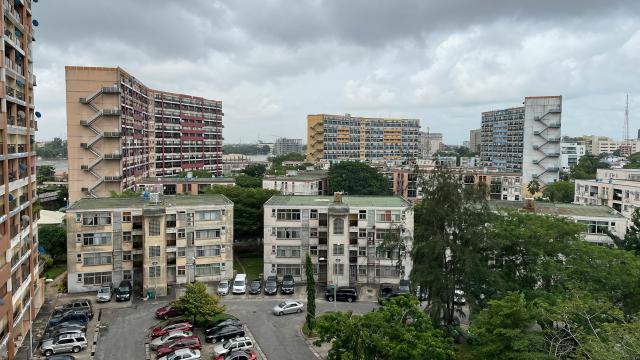
Africa's affordable housing problem stems from rapid population growth and urban migration and limited housing resources. Cities across the continent, from Lagos and Johannesburg to Nairobi, are growing at breathtaking rates. Unfortunately, the provision of formal housing remains insufficient to meet the growing demand. Given the weakness of the formal housing market, urban poverty is being addressed through informal settlement housing, which is poorly equipped and inadequately serviced. There are millions of formal housing market holds excluded from the market.
For many householders, the main reason is low income-relative housing affordability. 'Low cost' housing is still beyond the means of a large segment of the population, supported by low wages and inadequate mortgage financing. Home ownership through the traditional banking system is impossible. Even the rental market, which is poorly regulated, offers housing under substandard conditions and exploits the tenants.
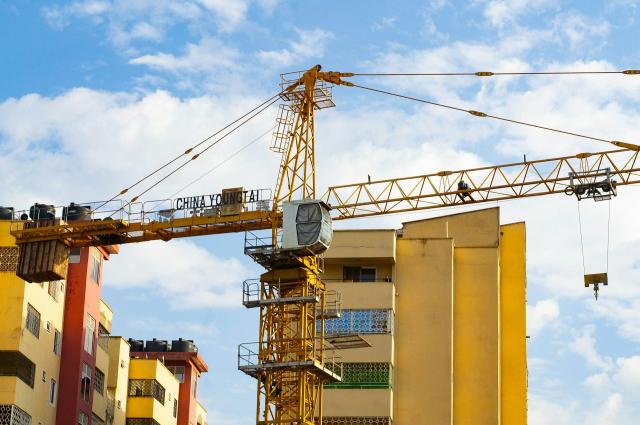
Innovative housing provision based on cost regulation is addressed through the use alternative building materials, including prefabricated housing, compressed earth blocks, and recycled materials, as promoted by private developers and governments. In Kenya and Nigeria, housing finance and micro mortgage partnerships through international NGOs, develop banking micro mortgage and housing savings cooperatives.
Latin America’s Affordable Housing Struggles and Successes
The affordable housing markets in Latin America are an indicator of development and endemic injustices. Most nations have gone a long way to increase access, but issues like informal settlements, inequality and poor institutions still dictate the results.
The Minha Casa, Minha Vida program of Brazil was among the biggest housing programs in the area, which was going to offer millions of affordable units. Although it has been successful in increasing supply, the critics have pointed out problems with the quality of construction, the distance between the employment centers and poor infrastructure. Likewise, the housing systems of Mexico were huge and simply generated enormous amounts of houses in remote locations, which resulted in high rates of abandonment.
Latin America continues to be informal in terms of housing dynamics. There is a high percentage of slum inhabitants in cities, e.g. favelas in Brazil or barrios in Venezuela. Although these communities are usually not legally recognized, they provide important sources of low-cost housing. Regularization and upgrading of informal settlements as alternative to merely eliminating them is growing in acceptance as viable and humanitarian.
Even encouraging examples of community-based models of housing can be found. In Chile and Uruguay, cooperative housing movements have enabled the low-income families to finance, construct, and manage low-priced housing collectively. These are models which focus on social solidarity, long-term affordability and a democratic governance.
The case of Latin America serves as an example of the need to have context-specific solutions. Government programs that are large-scale can provide results but they have to be counterbalanced with party.
Despite the good outcomes and the construction of millions of residential quarters in South Africa during the 90s with the help of RDP, the nation continues to face the problem of quality and location. The more integrated approach to urban planning in the case of Rwanda involves the combination of affordable housing with other required infrastructure and social amenities.
The future of the housing in the continent lies in the possibility to innovate on a greater scale, emerging ways of financing and at the intersection of the housing policy and economic development. Affordable housing will open the potential of human beings and build an inclusive growth than a roof over one’s head.
Global Trends and the Future of Affordable Housing
Examining the world, there are many global trends of affordable housing being redefined. To begin with, the scope of technology and innovation is growing, no longer prefabricated construction, but digital housing finance platforms. These technologies can help lower prices, accelerate shipping and increase access to underserved women.
Second, sustainability is going to be the center of focus. As climate change puts pressure on vulnerable populations, affordable housing is increasingly required to incorporate green building standards, energy efficiency and extreme weather-resilience. Affordable housing cannot be the one that is not environmentally friendly- it should be the first one to design future proof communities.
Third, financing structures are becoming diversified. In addition to conventional government subsidies, affordable housing projects are also being funded by development banks, impact investors and philanthropic organizations. Novel instruments like green bonds, social impact bonds and blended finance are opening up new avenues of investment.
Lastly, previously there was a growing understanding that housing is not an object of market relationships but a human right. International action campaigns are demanding greater protection of tenants, community empowerment, and housing policies that are founded on equity. It is this change of mind that is setting governments and developers with the responsibility to put people ahead of profit and to make housing policies set priorities of justice, inclusion and dignity.
The future of affordable housing is rooted in bringing the world and the city into a balance regarding knowledge and realities. The world may become a step closer to creating safe, decent and affordable housing by all by learning through various experiences, such as social housing in Europe, mass development in Asia, innovations in Africa, community models in Latin America and policy reforms in North America.
The Role of Public-Private Partnerships in Shaping Global Affordable Housing
Around the world, public-private partnerships (PPPs) are emerging as one of the solutions to increasing the supply of affordable housing. Government resources are often insufficient to meet the extensive demand, while private developers require incentives to construct affordable housing, as developers find it financially unfeasible. PPPs customarily provide the means to deliver more housing, of an improved quality, and with greater long-lasting durability.
In most cases, the PPPs in these regions consist of government subsidies and land contributions or tax incentives, while the private sector offers expertise in construction, financing, and management. In India, for example, public agencies partnered with developers to construct mixed income housing under the Pradhan Mantri Awas Yojana program, where public land was offered at below-market rates in exchange for developer promises to incorporate affordable housing units. Similarly, in Africa, there is collaboration between governments and international investors and local builders to undertake large-scale housing initiatives that would struggle to secure financing.
PPPs are also important to North America. The Low-Income Housing Tax Credit (LIHTC) in the United States is one good illustration of this, using tax credit to attract private funds to construct affordable housing. Canada is also capitalizing on the partnerships through its National Housing Strategy to co-finance develops with nonprofits and other parties that own property.
In addition to financing, PPPs may be used to ensure that housing developments are incorporated in the larger urban planning objectives. When these partnerships are combined with private investment to prioritize their needs with the needs of the community (e.g. transit oriented development, green building standards and community services), then affordable housing can be developed to be not merely affordable, but also sustainable and habitable.
On the other hand, there are legitimate concerns when it comes to PPPs. The need to provide some level of profit to private partners and the demand for residents to maintain the housing at reasonable costs need to be aligned at negotiation stages. There are risks that poorly designed agreements could dismiss affordability in the long-run to give developers what they want. This is why accountability, transparency, and community participation become vital.
The increased focus on the use of PPPs all over the world is also an important learning point: a single sector will never be able to provide affordable housing. Working together, through good governance and fair structures, is the most promising opportunity of bridging the housing gap and creating inclusive societies to benefit the generations yet to come.
Conclusion
Affordable housing challenges and innovations around the world differ from each other. Nonetheless, it is a universal problem that all people have access to affordable and safe shelter. Europe has social housing systems, Africa has developed resourceful approaches, Asia has mega housing projects, and North America has housing policies. All these provided approaches are beneficial to the global community.
The housing crisis is beyond an economic issue because it involves dignity, equity, and opportunity. Every person needs affordable housing that will help them access education, healthcare, and social mobility. The increased urban population worldwide is a major reason that the housing problem needs a solution as soon as possible.
By collaboration and innovative ideas through the recognition that housing is a human right, it will result in addressing the world’s housing problems. Countries may achieve equitable and resilient housing systems by sharing knowledge, strategic investment, and focusing on inclusion.
Also Read: The U.S. Housing Market: Home Improvement is Real



-3dkuLgKhRD.jpg)
-49HupTvwDD.jpg)








LEAVE A REPLY