

Affordable Housing in Nairobi: Why Construction Costs Are a Major Obstacle
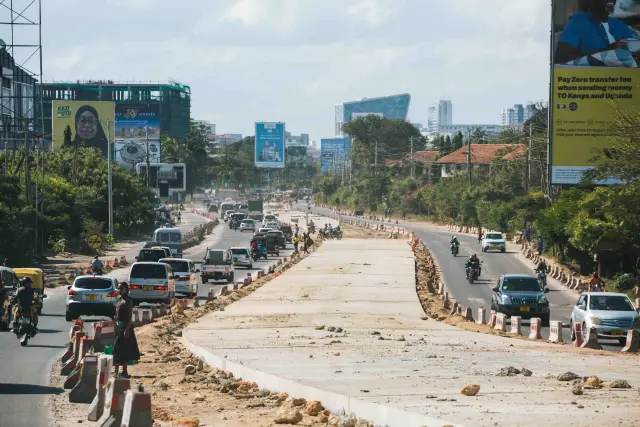
The capital of Kenya is Nairobi which is undergoing an unprecedented population increase with its population estimated to be more than 5 million and the population expected to grow to 8 million by the year 2035. The fast urbanization has put a strain on housing especially on the low- and middle-income earners.
 The effects of the government measures including the Big
Four Agenda, which seeks to develop 500,000 affordable houses, still cannot
solve the problem of severe housing deficit in Nairobi.
The effects of the government measures including the Big
Four Agenda, which seeks to develop 500,000 affordable houses, still cannot
solve the problem of severe housing deficit in Nairobi.
One of the major problems to attain affordable housing in Nairobi is that the cost of construction is very high. Although land, financing and policy constraints can be part of the problem, the biggest presence of the problem is the cost of construction, both to the developers and to the homeowners.
The increase in the cost of building materials, labor, and
technological inputs is a challenge in terms of providing homes at a cost,
which is affordable to the average Nairobi resident. As a result, a lot of housing
projects stall or increase their price to higher-income earners, and this
leaves the low-income earners in informal settlements.
This blog provides an overview of the issue of the effect of construction costs on affordable housing in Nairobi.
We analyze six dimensions that include the current housing crisis, drivers of construction costs, government policies and interventions, innovative building technologies, economic implications and possible solutions to the reduction of construction costs.
They are analyzed in each part with great detail in which the
construction economics of Nairobi determine the urban housing and the future
development of urbanization.
The Nairobi Housing Crisis
The shortage in houses in Nairobi is a complex issue. The rates of urbanization are about 4.5 per cent per year and the city is unable to sustain its increasing population. It is estimated that there is a shortage of more than 200, 000 housing units, which are unevenly distributed to the low- and middle-income earners.
Most of these inhabitants are in the informal settlements like Kibera, Mathare, and Mukuru where the conditions are congested, insecure, and without basic facilities.
The affordable housing programs that have been launched under Kenya Big Four Agenda and the Nairobi City County housing strategies have recorded some success. The government has planned initiatives such as Highrise Apartments in Umoja in Dandora to offer the middle-income earners with subsidized housing.
Nevertheless, the initiatives are not sufficient to fulfill the demand. The first reason is that it is considered to be expensive to construct, and this makes developers more inclined to specialize in luxury or high-end middle-class homes to make money.
The crisis is aggravated by land shortage. Central areas and peri-urban areas of Nairobi are experiencing the scarcity of plots in which residential development can be carried out, which puts the prices of land in Nairobi at a greater level.
The developers are forced to strike a balance between the costs of the land acquisition and the construction costs and in most cases this burden gets to be transferred to the potential buyers.
Moreover, the infrastructural shortages within informal settlements render new development costly as the developers in informal settlements will have to invest in water supply, electricity, and roads before building houses.
Explosion of the population, rural-urban migration, and a growing middle-income population increases the need, whereas the supply falls behind due to the high cost of construction.
Consequently, Nairobi experiences a structural housing issue where the low-income groups are no longer affordable due to which cycles of informal settlement development, and urban inequality continue to manifest.
The housing crisis in Nairobi is not just about the availability but it touches on social, economic and health outcomes. The inability to afford housing leads to longer commuting times, overstretched transportation, and residents to unsafe living conditions.
The role of construction costs can hence be a key in coming up with solutions that are sustainable in addressing the housing dilemma in Nairobi.
Researchers of Building Costs
The cost of construction in Nairobi is determined by a number of related factors. Among the largest ones is the cost of building materials. The major products such as cement, steel, timber, and sand products have recorded steady price demand as a result of the global supply chain, reliance on imports, and inflation.
As an illustration, the price of cement in Nairobi rose by more than 25 percent between 2020 and 2023 and steel prices doubled, which greatly contributed to the high price per unit of construction.
High cost of construction is also associated with labor costs. Professional workers like masons, carpenters, electricians and engineers attract high salaries because of shortages and demand. Informal settlements also tend to utilize cheap labor at the expense of quality and sustainability, and thus formal housing projects are more costly.
The Nairobi area has a shortage of land which directly impacts the cost of construction. The cost of acquiring plots in central and peri urban location is prohibitively high and in cases where the developers have to compete with commercial, industrial and speculative buyers. Infrastructure development is also an added cost even in regions where there is low cost of land.
It is also dependent on regulatory compliance. There is a requirement of strict building code, environmental standards and urban planning requirements observed by the developers.
Although these regulations are safe and sustainable, they add time and expenses to the project. There are also delays in the issuance of building permits, environmental impact assessment and land title checks that add to the costs.
Technological adoption though advantageous in the long run is expensive at first. The recent building methods like pre-fabrication, modular building and energy saving designs demand initial expense in machinery, human resource, and material. Developers are prone to balance these costs with profitability and many tend to remain with the traditional yet costlier method of construction.
Finally, the issue is aggravated by the cost of financing. The costs of capital are high because of high-interest charges, low repayment periods, and low access to mortgage by developers. Such costs are eventually passed over to consumers making it unaffordable to the poor.
Overall, it is a result of a confluence of material, labor, land, regulatory, technological and financing factors that high construction costs occur in Nairobi. These drivers need to be taken care of in order to record substantial improvements in affordable housing.
Policies and Interventions by the Government
The flagship program is the Big Four Agenda, whose aim is to build 500,000 affordable homes in the country. In Nairobi, particular projects have attempted to offer middle-income housing facilities via subsidized land, tax benefit as well as financing.
Amongst the notable interventions is the Kenya Mortgage Refinancing Company (KMRC) which is involved in the provision of long term, low interest financing to the developers and homeowners.
KMRC plans to decrease the ultimate cost of the housing units through the reduction of the cost of borrowing. Also, the government has implemented incentives in the form of tax benefits to the importers of construction materials so as to alleviate the cost pressure on the developers.
The housing strategy has been dominated by the public-private partnerships (PPP). With the government support and the expertise of the business and capital by the private sector,
Nairobi has witnessed projects that mix the infrastructure, serviced plots and high-density housing. The PPP model also minimizes financial risk to individual developers hence affordable delivery of units is possible.
Planning reforms in urban areas also aim at minimizing expenditures. A set of policies like fast-tracked building permits, zoning flexibility and combined development of infrastructures can reduce the duration of projects which in turn can cut down the cost of labor and the cost of finance. The government has also invested in the bulk purchase of building material in order to reduce the prices based on the economies of scale.
With these interventions, the effects have not been significant. Lag times, corruption and disjointed implementation are bureaucratic factors that hamper policy effectiveness.
Besides, the magnitude of the issue in Nairobi, coupled with the ongoing issues with the global supply chain, implies that a governmental aid will not be sufficient to address the cost barriers advantageous to the construction entirely.
Nevertheless, the policies offer a basis on what can be done later on. With a bit of optimization of incentives, approvals, and encouraging cost-effective technologies, Nairobi may, over time, lower the cost of construction and increase access to affordable housing.
Technologies in innovative construction
A solution to the high costs of construction in Nairobi is the innovative building technologies. The methods of prefabrication, the construction of modules, and 3D printing can decrease the costs of labor and materials and make a project schedule faster.
Prefabrication is a construction method where parts are manufactured in the offsite location and assembled in the onsite location. This will minimize construction wastes, labor needs, and project delays hence minimizing the total costs.
This is further displayed by modular construction that helps in construction of complete housing units in factories and moving them to their ultimate destinations.
The 3D printing technology is new in Kenya but it would offer fast and inexpensive housing. Through the utilization of local resources and automated construction, 3D printing is able to create hardy and affordable housing in a fraction of the time that it takes to build the same housing using conventional construction.
Another cost cutting dimension is sustainable building materials. Other options like stabilized soil block, plastic bricks recycled and compressed soil blocks are cheaper compared to cement or steel and yet they are safe. Also, energy efficient designs minimize the utility costs incurred by the owners in the long run, which makes housing more sustainable and viable.
Online resources like Building Information Modeling (BIM) and project management programs make the process more efficient, with the optimization of designs, tracking of material consumption and delivery of any possible delays. Developers are able to manage their costs as every phase of the construction is controlled with the help of technology.
Nevertheless, the implementation of these technologies is difficult. The cost of the initial investment, skills deficiency, and the need to obtain regulatory approval may put off developers. The government, academic organizations, and the innovators of the private sector need to jointly work on these solutions on the scale of the government.
Economic Impact of Exorbitant Construction Cost
The economic impact of high construction costs on the housing market of Nairobi and the urban development in general has enormous economic effects. The short-term impact is the lack of affordable housing of low- and middle-income residents. When prices exceed their reach, people have to get into informal settlements which cause poverty and social inequality rings.
To developers the high cost of construction lowers the profit margins in the affordable housing projects. Instead, many of them choose to construct high-end or upper-middle-class housing, in which the costs can be covered by the market value.
This change worsens the problem of inequality in the city, with the most vulnerable groups being underserved.
The economy at large is affected too. Home prices make commuting long and burdensome, transport infrastructure stricter, and decrease disposable income of households. Employees allocate sizeable part of income on housing and there is reduced expenditure on other areas and sluggish economic development.
It also influences financial institutions. The price of building is high thus resulting to high mortgage and increased default rate as well as decreased investment in affordable housing construction. Investors can favour short run profits in commercial real estate, rather than the long term social orientation housing projects.
Besides, urban planning is undermined. Expensive construction works are usually being concentrated in rich areas resulting in spatial inequality, congests in some regions of the city, and wastage of land in other regions.
The issue of construction cost barriers is not only a housing need but an economic necessity where the implications on the development of Nairobi are far-ranged.
Possible solutions to cut the cost of construction
A mix of policy, technology, and community involvement is a multi-pronged approach that should be used to reduce construction costs. Bulk procurement of building materials is one of the solutions.
By negotiating with manufacturers and importers directly, developers should be able to reduce the unit costs and transfer the savings to homebuyers.
It also requires government assistance in the form of subsidies, tax breaks and low-cost loans. Increasing the presence of KMRC and other such projects can ensure borrowing is more affordable and attainable to both the developers and the homeowners.
It is essential to encourage the use of alternative building materials, new technologies, including prefabrication, modular construction, and 3D printing. Worker training opportunities and relationship with educational institutions can be used to produce localized skills and minimize the use of imported expertise at a high cost.
Planning changes in cities that can reduce the delays and costs of projects through reforms that simplify approvals, avail serviced land, and combine infrastructure. Furthermore, the promotion of housing cooperatives and community-based initiatives permits collective bargaining, mutual resources and cost-sharing among the residents.
Government, private sector, NGOs and international partners can provide a sustainable ecosystem of affordable housing. The adoption of cost-saving technologies and methods can be fastened with the help of public-private partnerships, innovation hubs, and research funds.
These solutions can create a more inclusive and sustainable urban development as Nairobi will be able to steadily lower the cost of construction, increase access to affordable housing, and support the growth of affordable housing opportunities.
Conclusion
The only greatest challenge to affordable home construction in Nairobi is the construction costs. The increasing cost of materials, labour, and land, as well as regulatory and financing obstacles, still limit the delivery of housing by low and middle income earners.
The city is still unable to satisfy its housing demands due to expensive construction costs, the government efforts, and new technologies.
This issue needs a comprehensive solution, which includes policy changes, technological advances, funding, and involvement of the community. Nairobi can afford to build cheaper, thereby making houses more affordable to people, encourage economic inclusion, and facilitate sustainable development in the city.
Affordable housing is not only the social need but also the driver of economic growth, better living standards, and balanced urban development. The future of the city of Nairobi as an urban environment lies in the capability of the city to surmount this dire impediment.
Also read: The Big Picture: Evaluating Ghana’s Affordable Housing Strategy Under The Big Four Agenda





-3dkuLgKhRD.jpg)
-49HupTvwDD.jpg)








LEAVE A REPLY