

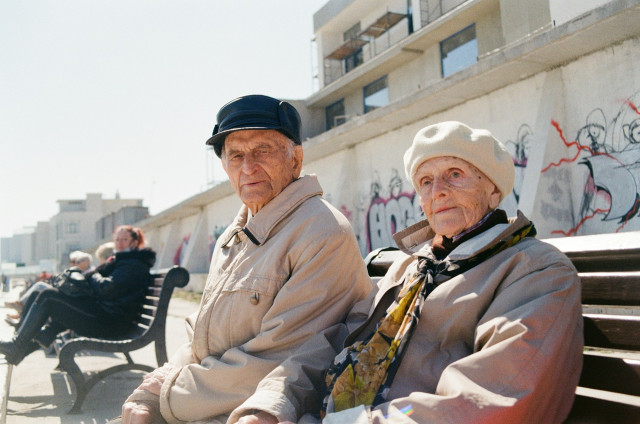
Designing Affordable Housing for Aging Populations
The world is experiencing a significant demographic change that is characterised by an increasing number of old people in the global population. Improvements in medicine and living conditions and a decrease in fertility rates have all led grievously to aging of societies in developed nations as well as developing. By 2050, a sixth of the population of the globe is projected to be above that age according to the United Nations projections compared to one in eleven today. This transition poses a challenge in almost all areas of public policy such as within healthcare to even pension, however, one of the most burning areas of concern is witnessed in the housing sector. The future housing of the aging populations has been both a personal concern of well-being, and a societal and economic issue of stability.
Housing a lot more than being the roof it is the basis of independence, dignity and social participation. Design and affordability of housing is also tremendously important in the case of aging populations. As individuals get older, physical, cognitive and financial situations evolve, and the housing needs change in often unpredictable ways. However, good property values, declining public funding and a lack of aging-friendly housing puts millions of older adults in jeopardy of facing housing instability or being placed in institutional settings. This prompt the question: how do societies develop affordable housing that is responsive to the particular needs of their aging populations and how can this be done without a loss of dignity, exclusion, and integration with the community?
This blog presents perspectives on the topic of designing inexpensive housing addressing the ageing population. It explores the current demographic realities, design innovation, economic models, societal effects, and policies that we can use to see the needs of older populations in all countries. By paying attention to these factors, it will become easier to see how affordable housing solutions can help older adults to age in their places, remain in touch with their own neighborhoods and lead good quality lives in their old age.
Demographic Reality and the housing challenge
The foundation of how to deal with housing in aging populations preconditioned by the demographic shift is knowing the scope and urgency of the demographic change. The process of aging of societies is cosmopolitan, however, its influence on the regions is rather different. Highly developed countries like Japan, Germany, and Italy have already received the reality of super-aged population, over 20 percent of the populations are aged over 65. In the meantime, there are huge demographic transformations that are currently taking place in such developing countries as India, China, and Brazil; these countries will soon face similar pressure albeit with not as many resources and as strong social safety nets.
Aging and housing are associated with each other in a complicated way. Mature age groups of people have a higher risk of losing income when they move into retirement and may only have to rely on their pensions or savings which are not in line with the increase in the costs of housing. Meanwhile their housing needs change with age. Issues on mobility may render stairs or skinny corridors unsafe, and existing chronic conditions may need placement to facilities or in-home structures. One more crucial condition is social isolation because lonely people living in poor neighborhoods are more likely to get depressed and experience a decline in health.
It is sad to note that there are a number of housing markets which continue to fall short of these needs. In cities, growing rents and property values have exceeded growth in incomes, leaving many older people spending enormously high percentage of their income on housing. Older people in rural settings have a hard time in the form of poor infrastructure and the non-availability of health care or social support systems. There is also the problem that there is not enough affordable housing stock that is purpose-built around the specific needs of seniors being in a position of having no affordable housing to match far too expensive housing on the private market and being subject to the potentially disempowering effect of institutional care facilities.
There is also a looming scale of crisis as depicted in demographic projections. Specifically, in the United States alone, the population of citizens age 85 and above is projected to more than triple by 2060, and there will be a consequent surge in demand of senior-friendly housing. In fast growing urban areas such as Asia and Africa, where the youth living in the regions remain the majority of people living in the areas even to date, the aging wave is coming fast than governments can be able to prepare against them. Absent concerted efforts and action, millions of older adults are at risk of becoming a housing insecure population in their golden years.
Innovations in Design for Aging Populations
Housing plays a vast part in accommodating the aging people due to its physical planning. A properly designed house can give opportunity to people of age category to have an independent life, be less exposed to injury, and improve the overall quality of life. On the other hand, the inadequacy of the housing can even worsen the health condition, promote the dependence on caregivers, and hasten moving into institutions.
Universal design is one of the fundamental ideas of housing design among elderly people. According to this approach, the design of the spaces should be planned to ensure that different individuals can access them, and no serious adaptations are necessary. Step-free entries, wide door frames, lever-type handles, and non-slippery floors appear to be insignificant features, but they go a long way in eliminating accessibility obstacles to those with mobility shortcomings. Unassisted showers with grab bars and room to turn around in a wheelchair can also help avoid falls, which are a top cause of injury in older people.
Beyond mere accessibility, design innovations are increasingly being incorporated to facilitate the current term coined as aging in place which is the need to have older adults to age in place rather than shuffling out of their homes and shifting to other residential facilities as they age. Home automatization can strengthen seniors and allow easy accomplishment of daily activities as well as offer security to the family and attendants. In other circumstances, technology can even notify emergency agencies in the case of a fall or medical emergency resulting in life-saving measures that lower demands on institutional facilities.
Another essential consideration is the community-oriented design. The aging process is best when older adults are not isolated in special facilities, but rather embedded in lively communities. The combination of the models of living units that combine individual living conditions with communal living spaces helps to strengthen the social aspect, denying loneliness and the feeling of belonging to the community. There are even intergenerational housing models where the older generation lives with families that have younger children, or students, as a way of both making an affordable home and one where they have support networks in place.
There is also an overlap between environmental sustainability and house design of aging populations. Energy efficient houses cut down on power bills and this aspect is essential among the elderly people with limited income sources. The green architecture involving use of natural light, healthy ventilation, and materials with environmental friendliness offers health and well-being to residents of all age. Collectively these design innovations show how housing designed to serve aging populations need not be sterile and institutional. Rather, through careful consideration it can provide healthy, thought out and safe places, that help older adults to live independently and with dignity at an affordable price.

Economic Framework and Affordability
Although design is significant, affordability is the core of the housing to the aging people. Older adults have fixed or declining incomes that may not allow them to pay increased housing costs especially in urban centres where the demand is very high and the supply is limited. The best way to deal with this problem is the combination of the public policy, new kinds of financing, and association between governments and developers, as well as non-profitable organizations.
The state of affordable housing among seniors is dependent on the intervention of public policies. Some of the means that a government can use are subsidies, rent control and tax incentives to developers of senior-friendly housing. In the Netherlands and Sweden, social housing systems support and offer affordable housing to older adults and include them as part of the mainstream community as opposed to being isolated in segregated homes.
The formation of partnerships between the government and business has become effective in most areas in the context of what is termed as a public-private partnership (PPPs). Governments can increase the supply of affordable housing without committing all the financial resources by harnessing the resources of the private sector through the combination of public land or subsidies with their investment and expertise. New and existing non-profit organizations especially the ones focusing on housing or aging have a major part to play in advocating and provision of affordable choices that fit within the unique needs of seniors.
Individual financing models are also important. Reverse mortgages, shared equity schemes, cooperative housing models and others offer flexible forms of accessing affordable housing without the older adult going into debt. Cooperative housing in particular enables seniors to own and manage their own housing as a community, encouraging them to participate in this community interaction whilst also keeping down costs.
Finally, it is critical to touch upon the issue of affordability on several levels, the systemic policies, innovative funding, and cross-sector collaboration. Only in that way can housing become a source of dignity and independence in later life.
Social and Community Aspects of Housing to Aging Populations
Housing does not just provide shelter but a sense of belonging, being together and having a place in the community. In older adults, housing and the social and community aspects thereof are also very vital determinants of health and well-being. We are aware of the problem of social isolation and loneliness as a social health issue, especially among these aging populations, which is associated with increased risks of depression, cognitive decline, and even death. The integration of communities can thus be a potent tool to achieve both housing and well-being when emphasized in solutions of the affordable housing category.
The creation of senior villages or cohousing communities is one candidate model in which gerontologically challenged humans would find more comfortable living situations. The models can encourage residents to interact on a daily basis even though they have their independence. Most importantly, they can be made to be affordable since they can be designed in such a manner that they pool their resources together and run on a cooperative or non-profit basis.
Another breakthrough housing is the intergenerational residence. Blending older adults with younger residents, including students or young families, helps these communities to provide opportunities of mutual benefiting each other. Older adults will have someone to talk to as well as take care of. Younger residents, on the other hand, will have an inexpensive place to live in and people to learn from. Other cities, including Rotterdam and Helsinki, have run effective intergenerational housing initiatives, showing how affordability and social cohesion do not have to be mutually exclusive.
Lastly, it has to be culturally sensitive design and planning. Housing models would also have to consider the wide variety of cultural demands with the aging population such as multi-generational households, dietary requirements and religious requirements. In most households across the world, the aged are inclined to stay with their extended family as opposed to staying in independent units and a housing solution is therefore needed that gives way to these preferences and does not compromise affordability. Aging populations can be given affordable places to live not only because of their physical needs, but also because of their emotional, social, and spiritual needs as well, all as a result of accepting the significance of social and community aspects.
Policy Innovations and Global Best Practices
Policy innovations and knowledge from the world best practices are ever-larger scale as the problem of aging is. Variations in approaches to designing affordable accommodations to meet the needs of aging populations are in existence in different countries and this is a good lesson to learn and adapted in local situations.
Japan, a country which leads in demographic aging, has invested a lot in the merging of housing and healthcare services. Alzheimer assisted-living apartments and community care facilities offer low-cost housing and low-cost medical care, which can eliminate the costly option of hospitalization. The Housing Development Board (HDB) has put in place policies in Singapore that not only make seniors housing affordable but also support the integration of communities living amongst each other in an intergenerational way.
In the Northern European regions of Sweden and Denmark, the social housing systems guarantee widespread availability of affordable and senior-friendly housing with high levels of government subsidiaries and support in cooperative housing. These nations are indicative of how long-term investment in the population can produce housing systems that respond to population change.
The LIHTC in the United States has served to encourage the developers to develop affordable housing models dedicated to the seniors. Non-profits are needed to close the gaps that the private market has failed to cover and often they provide novel and community based solutions.
Developing economies suffer in ways peculiar to them, but also have opportunities. In India, affordable housing access is expanding by using measures initiated within the Pradhan Mantri Awas Yojana (PMAY), but more efforts should focus on the requirements of older adults. In Latin America, housing cooperatives have proved how a community-led initiative can be used to develop affordable and socially fit solutions.
Conclusion
One of the global challenges of the 21 st century is the designing of affordable housing to ageing populations. With the increasing number of older adults in societies around the globe, the need to find housing options that can maintain an affordable cost, accessibility, and incorporation into the social groups in communities is ever growing. Not only is housing a material need, it is the foundation of independence, dignity, and quality of life in later years.
The way to go is very multifaceted the demographic realities present the policymakers with the need to plan at a larger scale to ensure that the expected numbers of elderly citizens have adequate housing stock to occupy. The universal design and smart technology allow for the solutions that allow aging in place and minimize the utilization of institutional care. The affordable access to such housing is possible through economic frameworks based on the subsities and financing models as well as partnerships. The social aspects of housing are also important and acknowledge the need of community, connectedness and sensitivity to culture when creating where and how older adults live.
The example of countries that have embarked on the global best practices has presented effective use of learning opportunities that demonstrate that with prior planning and dedication, the system can be designed to accommodate the needs of older adults without impairing affordability and inclusion. The issue is not only purely technical or financially related, it is also ethical. Economical housing among the older population is a demonstration of the willingness of a society to take care of its elders, and a recognition of the contributions a society has received through the life of an elder, and a right to live with dignity.
Also read: How Population Growth Affects Housing Demand



-3dkuLgKhRD.jpg)
-49HupTvwDD.jpg)








LEAVE A REPLY