

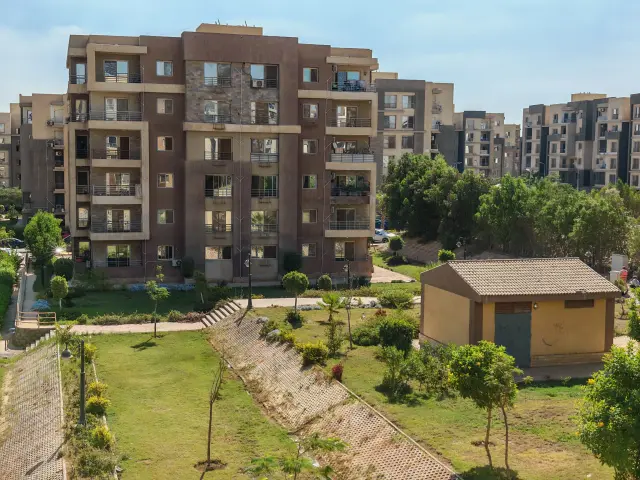
How Kenya’s Political Climate Affects Affordable Housing Development and Delivery
Another socio-economic issue of the greatest concern to Kenya is affordable housing. This is because of high rates of urbanization, population increase, rural to urban migration and an increasing income disparity have augmented the demand of low cost, decent housing in large urban areas in Nairobi, Mombasa, Kisumu, Nakuru and Eldoret.
 To this effect,
governments in succession have made housing reform central to national
development policies as they realize that access to decent shelter is a
constitutional right as well as one of the pillars of economic development.
To this effect,
governments in succession have made housing reform central to national
development policies as they realize that access to decent shelter is a
constitutional right as well as one of the pillars of economic development.
But
even with high policy statements and massive housing schemes, actual delivery
has been sometimes below estimates. The political climate in Kenya could be
considered one of the most influential, however, at times, neglected factors
that influenced this outcome.
Kenyan politics is decisive on determining the development priorities, legislative changes, budgetary allocations, enforcement, and investor confidence. The existence of affordable housing projects is not vacuolar, but a part of the political systems in terms of electoral politics, coalition politics, and devolution processes, ethnic interests, policy changes and governance reforms.
The political stability or instability directly affects
the speed of the land acquisition process, the speed of budgetary approval, the
formation of the partnership, and the continuation of the housing programs on
the long-term basis.
Furthermore, the housing projects tend to turn political. They are used by governments as a way of showing their concern towards the social good, the creation of employment, and economic reform.
On the one hand, this visibility may build momentum and funding, on the other hand, it may politicize the implementation process, provoke opposition criticism, and create policy uncertainty in the election year.
The political environment is under
close monitoring by investors and developers, as uncertainty is a factor that
influences risk assessment, financing cost, and project schedule.
This blog will analyze the impact of political environment in Kenya on development and provision of affordable housing. It discusses six key dimensions namely policy continuity and electoral cycles, politics of governance and devolution, politics of public finance and budget, political stability and investor trust, politics of land and patron-client, and politics of political narratives and public opinion.
A combination of these dynamics
shows the extent that the housing development is interconnected with the rest
of the political ecosystem. The knowledge of these relationships allows
developing robust housing programs, which can endure the shift in political
regimes and provide sustainable results.
Policy Stability, Election, and Changing Development Priorities
The politics of Kenya is subject to five-year electoral cycles, and they have a significant effect on the priorities of the public policy. Affordable housing initiatives have become customary at the start of a new administration with much excitement being touted as flagship programs that represent change leadership.
Nonetheless, changes in elections often include
policy realignment, repositioning, or reorganization of already existing
housing initiatives. This trend presents doubt, which may stall growth and
diminish the effect of the long run.
Every government has a tendency to base housing programs on its long-term economics. Newer leaders might change regulation systems, finance structures or redistribute resources to suit their political agenda.
Though
such changes are not necessarily bad, the sudden change may affect the already
existing projects, slow down the purchase, and scare away investors who want to
see the policy predictability. The developers who come up with long term
housing projects need to be sure that the regulatory and financial structures
will not be changed after a particular political term.
There are also temporary delays of project implementation during election seasons. In campaign times, the political mobilization of the government becomes the focus and government in terms of making decisions might be timid.
The civil servants will tend to withhold significant approvals or
financial commitments until the political fate is obvious. This delay may
paralyze land grants, construction deals, and subsidies on affordable housing
programs.
Also, the political rivalry occasionally results in criticism of the housing programs that are in place. The opposition leaders can question the procurement procedures, funding schemes, and selection criteria of beneficiaries.
Although accountability is enhanced through scrutiny, it can
also lead to court proceedings, parliamentary inquiries, or even reviews of
policies that slows down the process. The projects that have been viewed as
politically branded can be seen as controversial icons instead of the impartial
common goods.
The other implication of electoral politics is
short-termism. Politicians who are trying to be re-elected tend to give little
consideration to long-term structural changes like updating land registration
or deepening the mortgage market at the expense of visible and immediate
housing developments. This focus on quick outcomes can concern sustainable
planning and institutional capacity building.
Due to continuity, the affordable housing structure in Kenya
should have a bipartisan backlash and institutional immunity against political
changes. Housing is to be a national development issue across the party lines.
Unless there is continuity of policy over electoral cycles, there are high
chances that ambitious housing targets will exist as a dream and not as a
reality.
Governance, Devolution and Intergovernmental Politics
The 2010 Constitution of Kenya brought a form of devolution
to the country where 47 counties were formed that have a lot of power to decide
on land use planning, urban development, and local infrastructure. In as much
as devolution was meant to bring close to citizens decision making process, the
devolution process presented a complicated political process in matters related
to affordable housing delivery.
Development of housing has become a coordinated activity between national and county governments. Financing structures or large-scale housing programs might be planned by the national government, however, zoning approvals, development permits, and local planning regulation are under the jurisdiction of the counties.
Difference in politics between the national and
the county leadership may lead to slow implementation, especially where one is
a part of one political coalition and the other a part of a different political
coalition.
In other situations, counties focus on local-based housing programs that are not in line with national strategies. Although such freedom is a catalyst of innovation, it may lead to the fragmentation.
Developers have
to find their way through varying regulatory rules in different counties, which
add to the cost and legal overhead of administration. Issues of political
disagreements regarding revenue-sharing arrangements also complicate the issue
of funding of the infrastructure related to housing, e.g., roads and utilities.
The intergovernmental wrangles occasionally come to court
where the housing projects are stalemated due to the conflicting jurisdiction.
Indicatively, land ownership issues, jurisdiction of urban planning, or
investment in infrastructure can halt construction. These disagreements are
representative of larger political rivalry, as opposed to technical issues.
Nevertheless, devolution can bring possibilities too.
Politically aligned counties can also quicken their approvals and rally local
support to national housing goals. Effective housing initiatives tend to rest
on good working political networks that help to ease the decision-making
process and minimize bureaucracy.
Finally, politics of governance through devolution greatly
determine the affordable housing results. Both strong coordination systems and
the lack of partisan cooperation between the levels of the government is
necessary to reduce the risk of political friction and the efficient
implementation of the project.
Public Finance, Budgetary Politics and Housing Funding
The development of affordable housing needs serious
financial amount of money. The political decisions made on taxation, borrowing,
and budget disbursement have a direct impact on the magnitude and rate of
delivering houses. Parliament is a key player in passing budgets and levies
that relate to housing and as such, affordable housing remains the subject of
heated political discussion.
Funds raised by housing are usually politically sensitive especially those that are sourced by the payroll funds, partnerships with the government and those sourced by sovereign borrowings.
There might be detractors
that will question the unfairness of the compulsory payments or the openness of
the funds management. The use of parliamentary discussions might slow down
implementation, particularly when there is an opposition to the proposed
methods of funding by the opposition parties.
Financing of houses is further complicated by the
reallocations of the budget during the recessions. The political leaders have
to be middlemen between competing needs like health services, education,
security and infrastructure. When the economy is pressured, housing funds can
be cut or diverted, pushing the construction process to a crawl.
Political factors also determine the targeting of the
beneficiaries. The leaders are also able to concentrate on the housing
development in politically favorable regions to win a block of votes. As much
as these decisions may replicate the development needs, there are chances that
they will raise controversy and thus undermine the confidence of the people.
Moreover, the magnitude of national debts and international financial trade is also a factor that affects the borrowing of housing infrastructure. Political decisions regarding the question of fiscal discipline and debt management precondition the sustainability of funds in the long term.
To ensure affordable housing is flourishing initiatives that support it need to
be open, responsible, and devoid of partisan wrangling. Sound financial systems
also increase investor trust and allow planning over a long term without the
need to go through elections.
Political Stability, Security and Investor Confidence
Political stability is very important in investor
confidence. Kenya has had some stages of political tension especially during
contested elections. Even sporadic cases of unrest have the potential to upset
construction schedules, destroy property and raise insurance premiums.
Local and international partners tend to be involved in
affordable housing projects over a long period. Before investing, investors
consider the political risk. Instability is perceived which increases cost of
financing, lenders would need more to compensate the risk. This has a direct
impact on the affordability since higher prices are later on transferred to
home buyers.
Political stability promotes consistent construction
business, stable enforcement of regulation and safe land deals. On the other hand,
uncertainty can cause the developers to be wait-and-see until the new political
conditions stabilize before they embark on new projects.
Security is also one of the factors that affect the selection of housing sites. The developers can choose to avoid the regions that are viewed to be politically unstable hence restricting the development of houses in those areas.
This could increase disparity in the region and slow
down an inclusive development of the urban areas. It is thus important not only
to strengthen democratic institutions, promote peaceful electoral processes,
and rule of law but also to sustain housing investment.
Pollution, Patronage and Power Structures
In Kenya, land is highly political. Patterns of land
allocation that existed historically, the capture of elites, and patron-clientnetworks all remain in the diaspora in determining access to prime urban
housing-friendly land. The political power can also dictate on how land is
allocated, rezoned or reserved to public projects.
Housing programs that are affordable will mandate the
attainment of urban valuable land. Such allocations may be opposed by competing
politics interests especially when influential people are interested in the
current land uses. The procurement decisions and selection of the contractor
might also be affected by political patronage, which brings up the issue of
transparency.
The issues of land are often overlapped with political
alliances. The challenges to ownership or acquisition of property through court
cases might be politically motivated. Such disputes will slow down housing
developments and raise legal expenses.
The land politics needs to be tackled through clear cut
governance, computerized land titles and effective implementation of
anti-corruption measures. It is important to de-politicize land administration
to give a fair chance towards the development of affordable housing.
Political Conversations, Social Approach, and Acceptability
Affordable housing is a technical or a financial problem not
just a political story. Leaders position housing initiatives as manifestations
of a desire to pursue social justice and economic empowerment. The political
messages can affect the perception of citizens to housing programs.
When housing programs are perceived to be non-discriminatory
and open, the citizens become more supportive. Nevertheless, the doubt of the
eligibility requirements, fairness of allocation, or corruption may create
resistance. During campaign time, political rhetoric can enhance criticism
which can influence the rates of enrollment and participation.
Perception is highly dependent on media coverage. Even when
the projects have been lawfully conducted, investigative reports of procurement
or funding scandals can result in a lack of trust. Social perception has
effects on the rate of uptake and sustainability.
Establishment of social legitimacy involves good
communication, open processes and regular interaction with the citizens. The
housing programs should also show real results exceeding the political branding
in order to remain credible over political transition.
The Role of Political Accountability and Anti-Corruption Efforts in Housing Delivery
A major factor affecting the success of the development of affordable housing in Kenya is political accountability and enforcement of anti-corruption. Housing projects are associated with massive amounts of public spending, land use, and other contracts, and public-private associations, which exposes the sector to misuse and corruption.
When political leaders being
shown to be dedicated to transparency and institutional control, the investor
confidence will be boosted and trust among the people will be enhanced. On the
other hand, accusations of irregular procurement, overcharging construction, or
preference in the distribution of beneficiaries may paralyze the projects and
provoke investigations, auditing or even the court process that delays
delivery.
Parliament, the Auditor-General and anti-corruption agencies
are some of the oversight institutions that are very important in overseeing
housing programs. Their moves may strengthen the legitimacy or reveal the
system flaws that need reform. The political will happens to make
accountability mechanisms either become effective or be symbolic.
Effective anti-corruption efforts can be used to make sure
that the money meant to go to low and middle-income families does not go
astray. Clear digital beneficiary register, land records and procurement
systems minimize chances of political influence. Finally, regular
accountability safeguards help housing programs to avoid politicization and
increase sustainability.
Conclusion
The political environment in Kenya has significant implication when it comes to the affordable housing construction and provision. Electoral cycles affect the continuity of policy and devolution brings in intergovernmental political processes which affect approvals and implementation.
Investor confidence is directly related to political stability
and funding stability is calculated by budgetary politics. The issue of land
politics and patronage networks complicate the process of acquisition, whereas
societal acceptance is determined by the discourse presented in the form of
narratives.
Affordable housing cannot be completely apolitical as it
depends on population policy, financing and government. Nevertheless, the
vulnerability to political instability may be minimized through the
establishment of institutional protection, bipartisanship, open financing
processes, and predictable regulatory systems. It is also important to
strengthen the rule of law, increase the cooperation of governments, and
promote confidence in the population.
To have sustainable housing results in Kenya, affordable housing has to transform into a politically branded project into a sustainable national priority as part of the long-term development planning. It is only under these circumstances that the housing programs would be able to withstand political changes and provide significant transformation to millions of Kenyans in need of safe and respectable homes.
Also read: How Land Tenure Issues Are Holding Back Affordable Housing Development In Ghana’s Slums





-3dkuLgKhRD.jpg)
-49HupTvwDD.jpg)









LEAVE A REPLY