

Affordable Housing that’s Also Beautiful: Best Designs of 2025
In 2025, there is a silent revolution of the concept of affordable housing. Affordable housing, in the old days a home to atomic-bomber-ugly, utilitarian, built-to-a-perfect-cost block construction, is now going through a golden Age of conscientious design, neighborhood integration, environmental sensitivity and architectural beauty.
The phrase affordable housing has over the decades acquired (or had the tendency to acquire) a connotation connotations dreary buildings, shoddy construction materials, and a shadow of sense of anti-aesthetic and cultural ambition. Yet the scenario is changing. The common belief that beauty and affordability do not go hand in hand is starting to be begged the question by architects, governments, nonprofits and even developers around the world. They are proving by policy and practice that healthy and affordable housing can be elevating, spiritually uplifting and inspiring.
The movement does not entail aesthetics as an end in itself, but the acknowledgment on how beautiful spaces influence behavior, wellbeing and community pride. Housing designs also help eliminate crime, promote mental welfare, foster civic engagement, and intergenerational resilience. A good design speaks of value; not only to the dwellers in the place, but also to the larger city. It could be a modular structure in Lagos, a solar-settled complex in Los Angeles or a timber-framed social housing in Berlin, but the words are one and the same: All people should be provided with not only shelter, but beauty, comfort, and sustainability.
This blog discusses some of the most affordable housing designed in 2025, and analyzes how this transformation around the world is emerging in design, policy and city-planning. As well as being architectural accomplishments, these examples are guides to a more equitable and beautiful urban future.
Innovative Mixed-Use Developments: Blending Affordability with Urban Life
The development of mixed-use buildings which is more than just a housing provision and which incorporates not only living with working but also community services, green areas and economies of local areas is one of the most thrilling tendencies of the affordable housing sector in 2025. Mixed usage affordable housing could be determined as the feasible solution to the problem of dense urban development, limited land with a necessity of inclusive and lively neighborhoods.
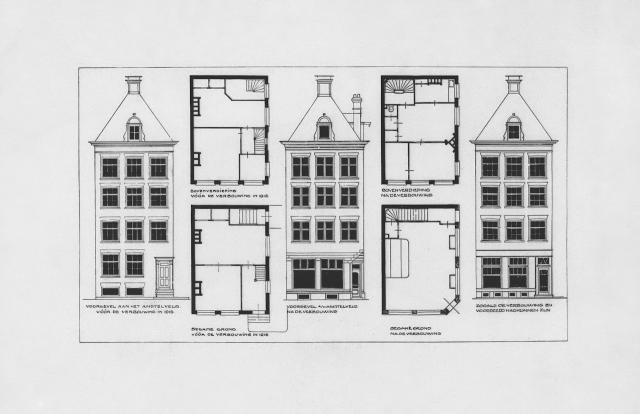
Such cities as New York, Tokyo, and Amsterdam those complexes of new housing are constructed deliberately in close to transportation hubs and are fitted with ground-floor shops, libraries, health centers, and co-working zones. An example of this design practice can be noted in the Sendero Verde project in East Harlem.
Considered to passive-house standards, it comprises more than 700 affordable apartments, a public school, a wellness center, and indoor urban farms. The outstanding part of it is not only that it is eco-efficient, but it also effortlessly incorporates low costs with upward mobility and neighborhood vibrancy.
In another location, Singapore, the Kampung Admiralty complex has gained international recognition due to establishment of a vertically stratified village. The project will provide senior apartments without forgetting a medical store, child-care facilities, rooftop gardens, and food courts. Such considerate stacking does not just save land in space-scarce urban environment but will also encourage inter-generational interface and societal acceptance.
These are mixed-use models that show that given their place within a larger urban vision, affordable housing can act as a catalyst of community development, shorter commutes, and a more healthy and interconnected lifestyle. Notably, these are not all budget-destroying projects are but rather cost-effective ones owing to the intelligent design as well as the collaboration between the government and private sectors through operation. They demonstrate to us that cities may be inclusive without becoming less ambitious or less imaginative.
A. low-income Housing as Art: Architecture That Motivates Society
The 2025 design ethos puts into concept that affordable housing can, and ought to be beautiful. The time has passed when low-income units were covered with boring concrete walls or placed on the edge of the city ecosystem. Affordable housing is becoming a platform of innovation, creativity, and cultural identity by the modern architects of today.
The award-winning people of Sugar House Island development in London do combine lower family accommodation with neighborhood (in an area focused on arts studios and green parks, along with common areas). By contrast, at no point does the architecture appear homogenous since it is instead toying with vivid colorings, local materials, and shape-textured forms, that seem quite modern in purpose, but yet historical in nature.
At the same time in Medellin, Colombia, local architects have collaborated with the community to create colorful hillside houses not only to the security and seismic requirements, but also in a local artistic direction. Murals are hung on façades, common areas are framed in natural wood and profuse plantings and layouts are to allow natural ventilation and daylight. Laurel Street projects in Charlotte and Austin in the U.S. have sharp modernist line profiles, long-term sustainable timber skin and partially covered patios.
These trends demonstrate that the high cost design is not the only option it is how you prioritize, how creative you can become, and how the community itself can work together. Affordable housing with art can achieve more than protecting residents: it can strengthen residents, raise spirits, and encourage people to take ownership over their communities.
Green and Sustainable: Affordable Can Be Climate-Intelligent
Most beautiful affordable housing designs of 2025 will not only be beautiful, but they will also be environmentally responsible. As climate change has further disadvantaged low-income people, sustainability changed its status of a luxury into a need. The good news is that green roofs, solar panels, passive cooling and water smart landscaping are being pioneered by the builders of affordable housing.
In California, new projects within the Low-Income Housing Tax Credit Program created by the state must be based on a high level of energy performance such as LEED certifications and net-zero energy objectives. Such projects as Watts Works Housing Complex in Los Angeles show that it is possible to use solar integration, high-efficiency insulation, and grey water recycling integrated effectively in low-cost housing.
Warmed up cities such as Vienna and Copenhagen remain at the global standard. Their affordable housing features district heating, triple-glaze windows and breathable facades, yet the rents remain much lower than the average one. Local NGOs in the city of Nairobi have come up with rainwater harvesting modular houses with bamboo cladding, ready to be deployed in a short period of time in the informal settlements.
These case studies indicate that green design is no luxury but rather a resiliency and cost-cutting planning tool. Air quality is improved, energy bills are lower and health consequences follow. As more governments are adopting green building incentives, 2025 can be the year, where sustainable affordable housing becomes the new rule, and not the exception.

Culturally Sensitive Housing: Honoring Heritage and Identity
A more profound cultural awareness is one of the essential forms of breakthrough in the field of affordable housing in 2025. Architects are beginning to turn to local tradition, materials and community models rather than copying western or globalised models of housing. In Morocco, new construction of housing development uses the traditional raid plans with modern features in the construction with the maintenance of the courtyard design and tiling art forms. Through local cooperatives that design bamboo and clay houses, rural India is realizing the impressive cost-effectiveness with such houses fitting into the cultural ways of life.
Examples of feedback being put into the Aboriginal housing programs in Australia include use of structures with inputs of elders and using materials harvested in the bush to make houses that would adequately signify their indigenous traditions. At the same time, Native American tribes in the United States are partnering with eco-architects in the construction of solar-powered Hogan and longhouses blending old wisdom in construction and frontier toughness of materials.
This paradigm transcends the view that housing is nothing but the construction of walls and roofs, but it is about belonging, memory, and spiritual foundation. WE Become affordable housing, but we also become places of healing and continuity by listening ourselves to the communities, by giving their stories more prominence through design.
Multi-modular and Prefab Magic: Rapid, Effective, and Elegant
The second bright trend of 2025 is the introduction of modular and prefabricated buildings as the means of addressing affordability crisis in the city. It is not the drab, box-shaped buildings of years past. The modular structures of today are slim, tough, and simply amazing in terms of how fast they can be erected. Firms such as ICON, Mighty Buildings and Katerra are redefining the construction calendar through 3D printing, robotics and eco-friendly composite materials. A pilot project in Stockholm put up old apartment blocks and built new prefab wood parts within 12 weeks, with each lightly equipped with full-height windows, built-in storage, and energy-positive systems.
The micro home movement, modeled after Muji, has also produced small units with minimal infrastructures that can be adapted to the needs of the family therein in Japan. In Pakistan, the non-governmental organization, NGOs such as Gul Bhago are constructing prefabricated houses using recycled plastic and insulating wastes- with the attributes of affordability, insulation and quaking. People can repeat the designs using modular architecture, reduce wastes, and manage costs without making compromises on style and livability. Demand lags behind supply in all cities and, therefore, modular houses are a flexible and repeatable plan that people can get where they are, fast and beautiful.
Designing for Dignity: Elevating the Resident Experience
After all, aesthetic value of affordable housing cannot be seen in specific materials and facades only, but only in the ways people feel. Architects and other planners in 2025 are becoming more and more architects of dignity. It implies spacious, bright corridors, open access; areas where people can congregate and where children can enjoy playing without harming anyone. It is permitting individuality: balconies where the residents can put plants, courtyards where the neighbours can mingle and window that allow sunlight and views. The model found in Paris under the name of the Rsdence Flora Tristan provides such an example with the staircases that are created as the sculptures, natural materials, furnishings, and mindful communal gardens.
Trauma-informed design elements in transitional housing are already included in city-developed pilot initiatives by the formerly homeless populations in Toronto. Warm color schemes, ear-muff aid and personal balcony- slight but significant changes, have massive psychological effect. Dignity in design changes the way the residents interact with the setting. It brings about ownership, care and stability in the long-term. The great designs of 2025 take us back to the reality that affordable housing does not only have to pass the code, it must also pass the test of the human capacity to feel the beauty, joy, and sense of belonging.
Community-Led Housing: Empowering Residents through Participatory Design
By the year 2025, there are few evolutions as interesting as the emergence of community led design in the affordable housing sector, where the community is not only the recipient of houses, but it is also the designer of the community they are living in. This is a reflection of the understanding that people in affordable housing can provide meaningful information on what works, what is lacking, and what would make a place feel like home.
Increasing numbers of architects, non-profits and even municipalities in many parts of the world are engaging in participatory design; by which communities, and in particular, historically disadvantaged groups can be empowered to actively participate in the shaping of the built environment, and at every level have a chance to express dignity, usefulness and beauty.
The most notable one is the La Borda housing cooperative in Barcelona. Designed by and with its members, the complex is energy efficient and timber framed and developed in an extremely collaborative process. Residents were also involved in the planning process, everything, starting with the first idea and ending with interior designs and materials. They favored great communal kitchens, co-working places, and green courtyards as opposed to regularly utilized balconies or car parks, which yielded a cost effective and also socially inclined construction that meets as well the passive house standards. This method did not only help to keep the expenses minimal, but also created a feeling of shared ownership and emotional attachment to the area.
The same can be said about South Africa where a project called the Empower Shack allows people living in informal settlements to participate in the design and improved housing units in their settlements through modules. Urban-Think Tank, with the aid of local authorities, has come up after a series of brainstorming to create two-storied structures that are well- built, economical, and pleasant to the eye given that the facade of such structures have been painted using colors that accompanied great cheer on the part of local residents themselves. Not only are these homes much more liveable but they have produced a surge in local pride and community strength.
The architectural studio of Elemental, based in Latin America and spearheaded by Alejandro Aravena, has perfected the half a house model, with a government creating the necessary structural skeleton, then inhabitants gradually fill in their houses or add sections to them as time and budget permits. As it turns out, what this idea offers in the way of cost-efficiency, it gains back in design versatility and the ability of its residents to incrementally enhance their own space and to do it with dignity and self-sufficient ingenuity. Their work in Chile and Mexico still prevails in the role of design to provide lasting affordability without compromising the integrity of architecture.
What all this dew dropping demonstrates is that beauty in affordable housing is a matter of process as well as materials or form. Housing generated by the community means greater investment into the product. It makes sure that the end product will depict the local needs, aspirations, and cultural stories. It is, also, much more likely to deliver housing that is in a better condition, more socially harmonious, and future-proof. The arising aesthetics can be richer, more context-sensitive and emotionally moving than the one which is top-down imposed.
Don t expect beautiful affordable housing to happen to people, it will only happened alongside them, in the year 2025. The idea that on community participation as a democratic endeavor is not only wrong, the thought that community participation is no more than a design tool that can result in more meaningful, good spaces. With an increasing number of cities embracing this comprehensive strategy, the housing industry the world over is coming to realize that, beauty, affordability and empowerment are not distinct objectives, but inseparable strands of a fabric of a livable city.
Conclusion
The more we gaze at the exceptional affordable housing designs of 2025 the more at least one fact is bound to make itself evident to all of us: beauty is no longer a luxury in housing-it is a must. Somehow within these walls whether through clever planning and urban design, sustainable materials, volumetric building, an approach to place that tells the culture story, or all the above, the more outstanding housing projects of this time realize that design is anything but neutral. It defines experience, opportunity and equity.
Architects around the globe are showing that inexpensive housing does not need to be simply practical; it can be pleasurable, respectful and life-altering. It can present the best of local acceptances and can lean in support of world innovation.
What is more important, this move is not only aesthetic but also moral. Beautiful affordable housing supports the statement that everyone ought to live in a building that inspires them. These designs do not go around as buildings only but are statements of what we cherish as a society. The question moving forward through 2025 and beyond is how to multiply and expand these models with the understanding that beauty in housing is not an anomaly but the rule. As we all go about reimagining the built environment governments, citizens and designers cannot go about doing it with the belief that good design is a cost but rather an investment that ensures human dignity and urban justice.
Also Read: A Practical Guide to Designing, Planning and Executing Citywide Slum Upgrading Programmes



-3dkuLgKhRD.jpg)
-49HupTvwDD.jpg)








LEAVE A REPLY